SG60 It’s Giving Fest — Harmony Hero
A three-button rhythm challenge turned musical timing into a playful festival experience.
- Three-button deck
- Portrait rhythm screen
- Interactive software
- Installation integration


A three-button rhythm challenge turned musical timing into a playful festival experience.

Singapore
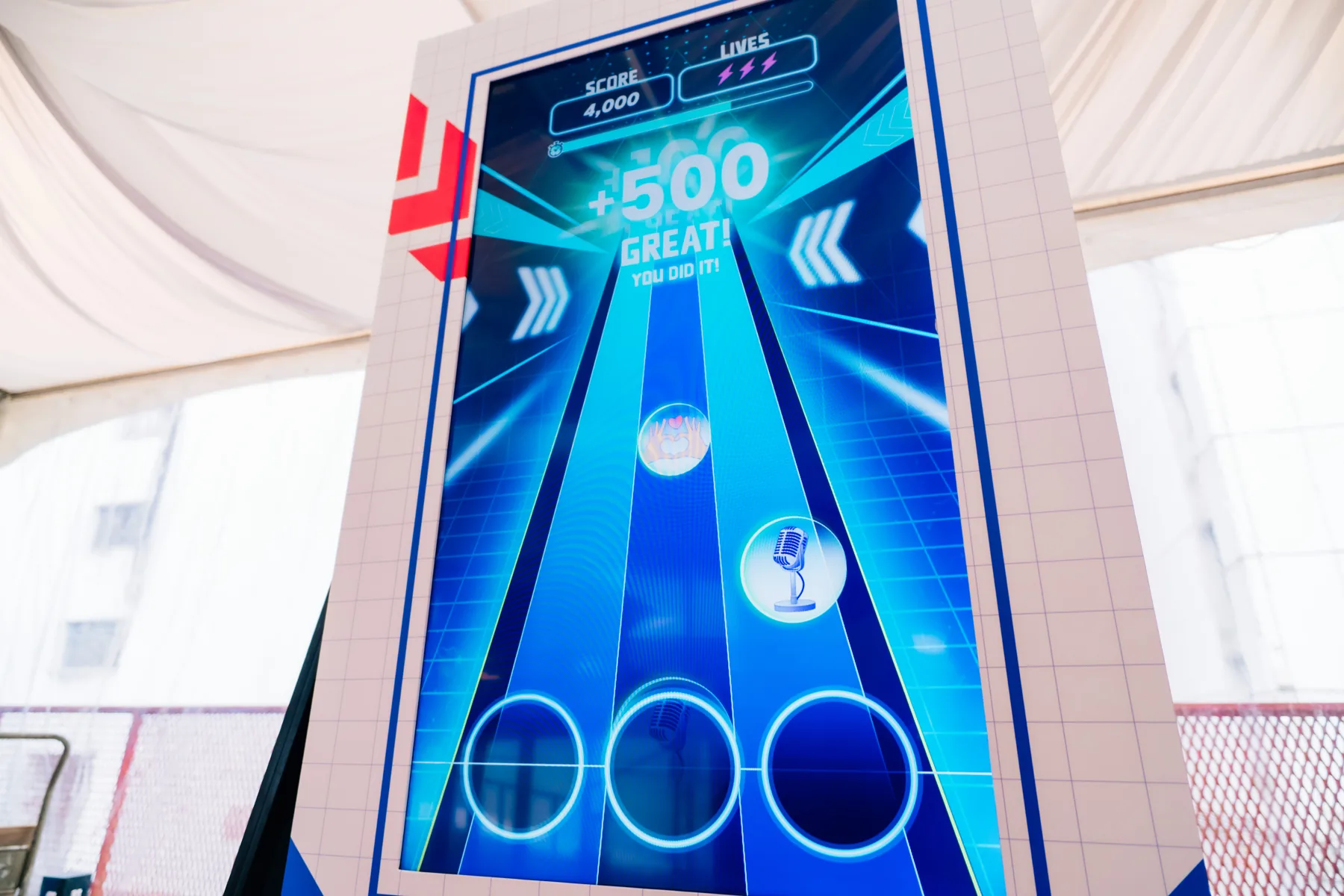
Harmony Hero placed a portrait rhythm display above a deck of large illuminated buttons. Visitors followed falling cues and pressed the matching controls in time, receiving immediate feedback and a score at the end of the track.
Create an energetic challenge that visitors could understand by watching and then trying. The design needed to make the link between falling notes and physical buttons obvious, with a clear finish for each participant’s turn.

The hardware
Matches the physical controls to the falling-note lanes.
Shows the approaching cues, play line and score.
Connects button timing with the track and game feedback.
The software
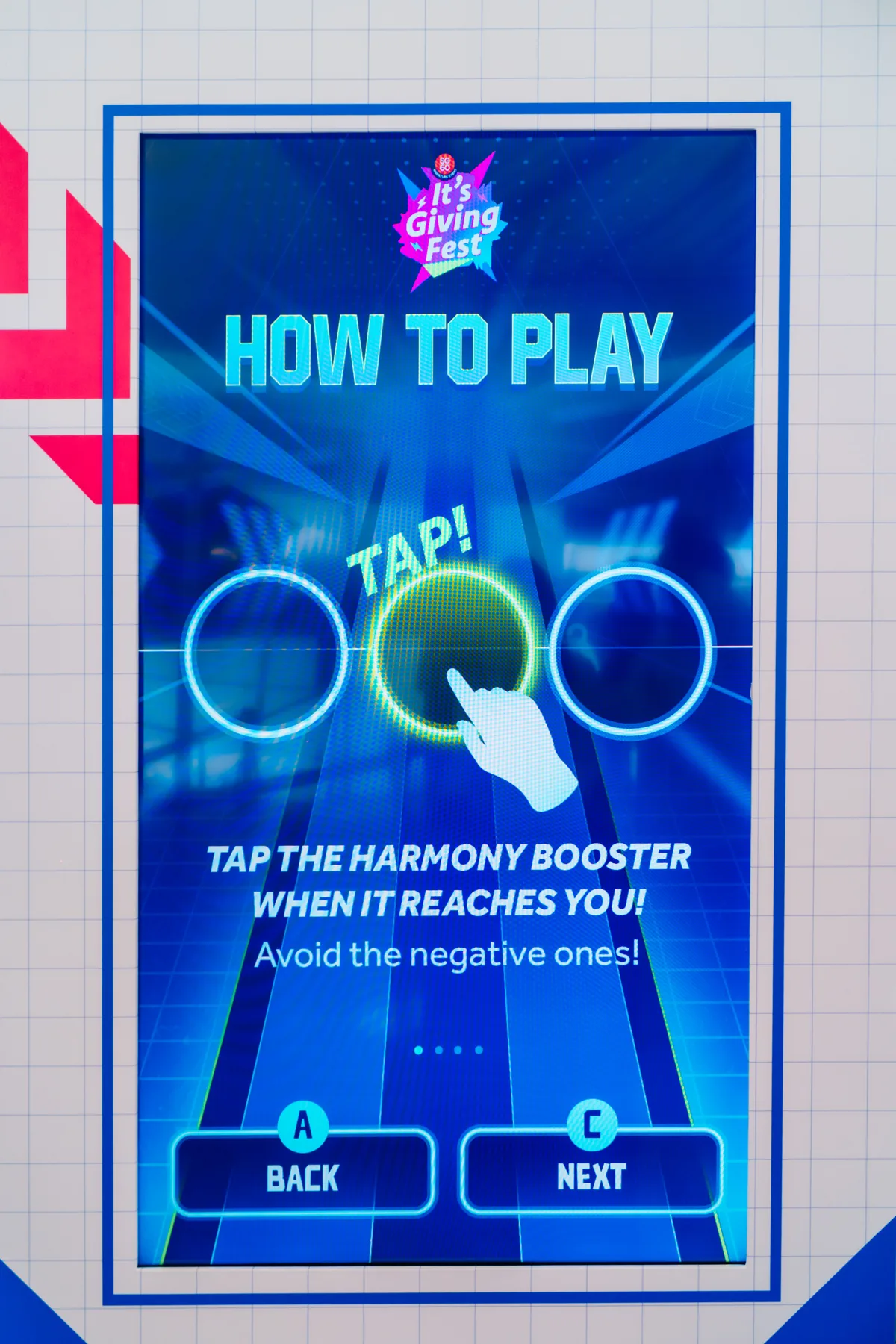
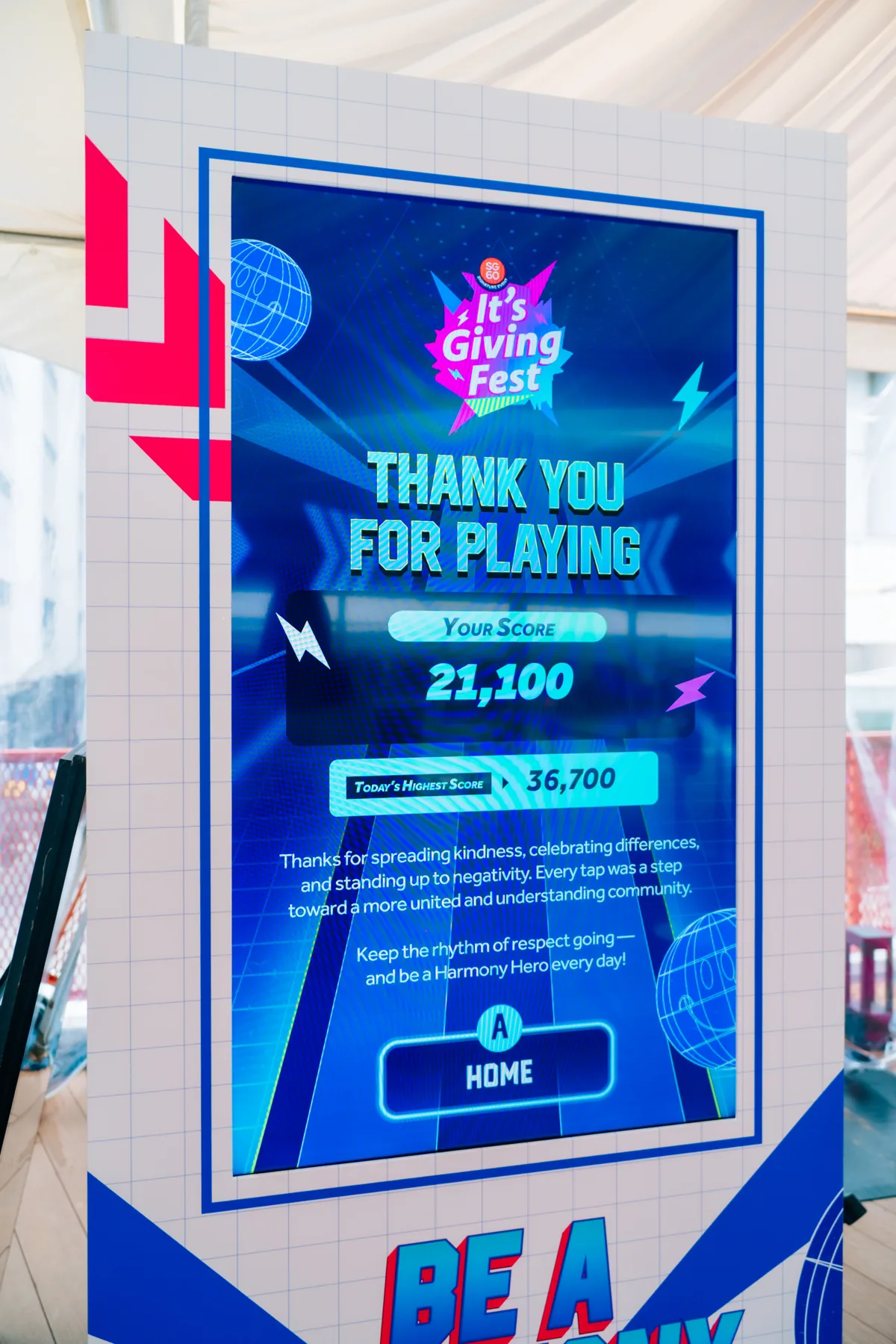
The rhythm application coordinates note timing, button input and score feedback. Instructions introduce the three controls before play, while the end-of-track state presents the result and prepares the next session.
Follow the falling-note instructions.
Track each note as it approaches the play line.
Use the corresponding physical buttons.
See the score at the end of the track.
The finished experience
The rhythm station brought a visible, easy-to-follow challenge to the festival’s interactive game zone.

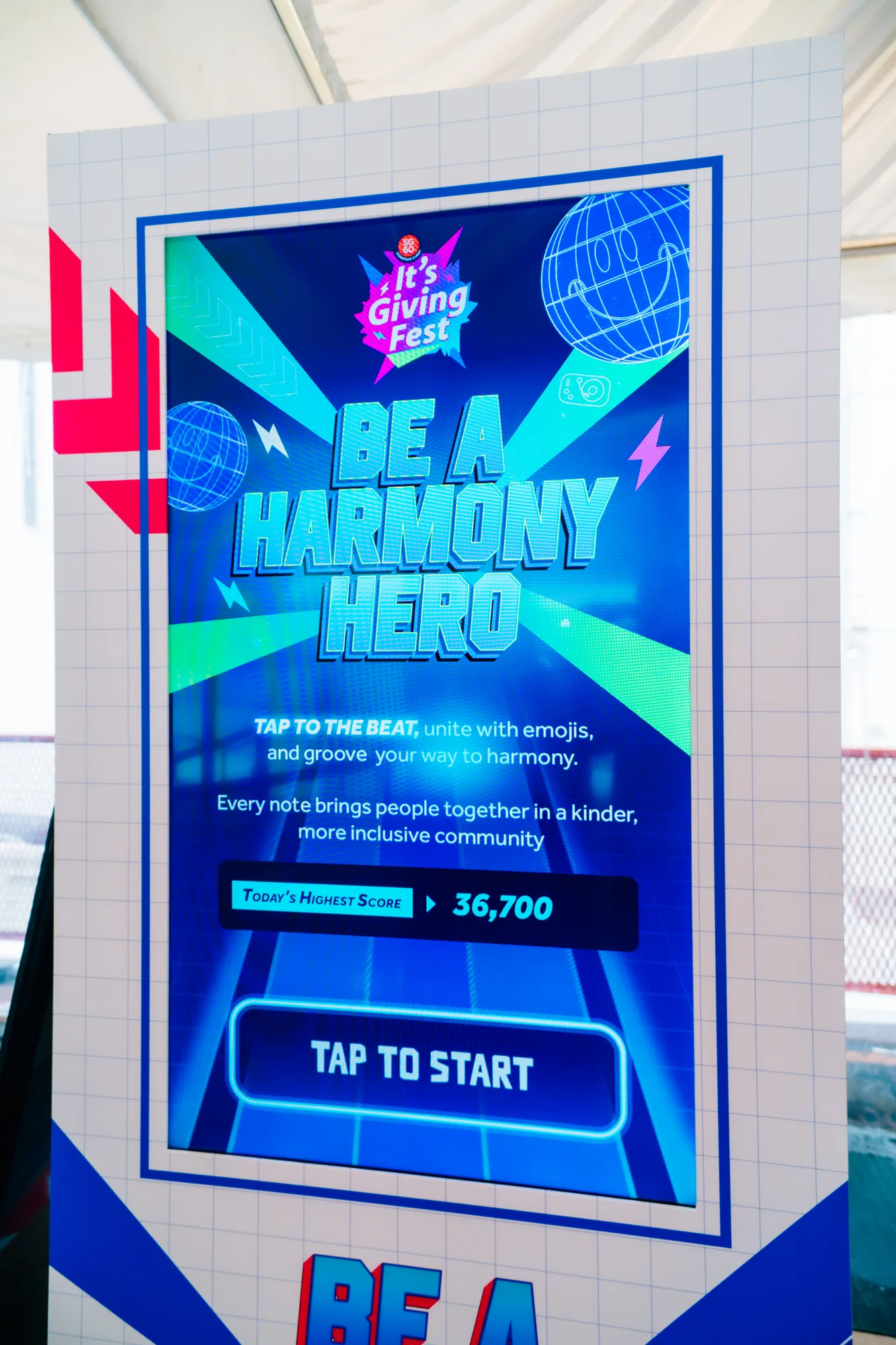
The rhythm game begins with a clear tap-to-start invitation.
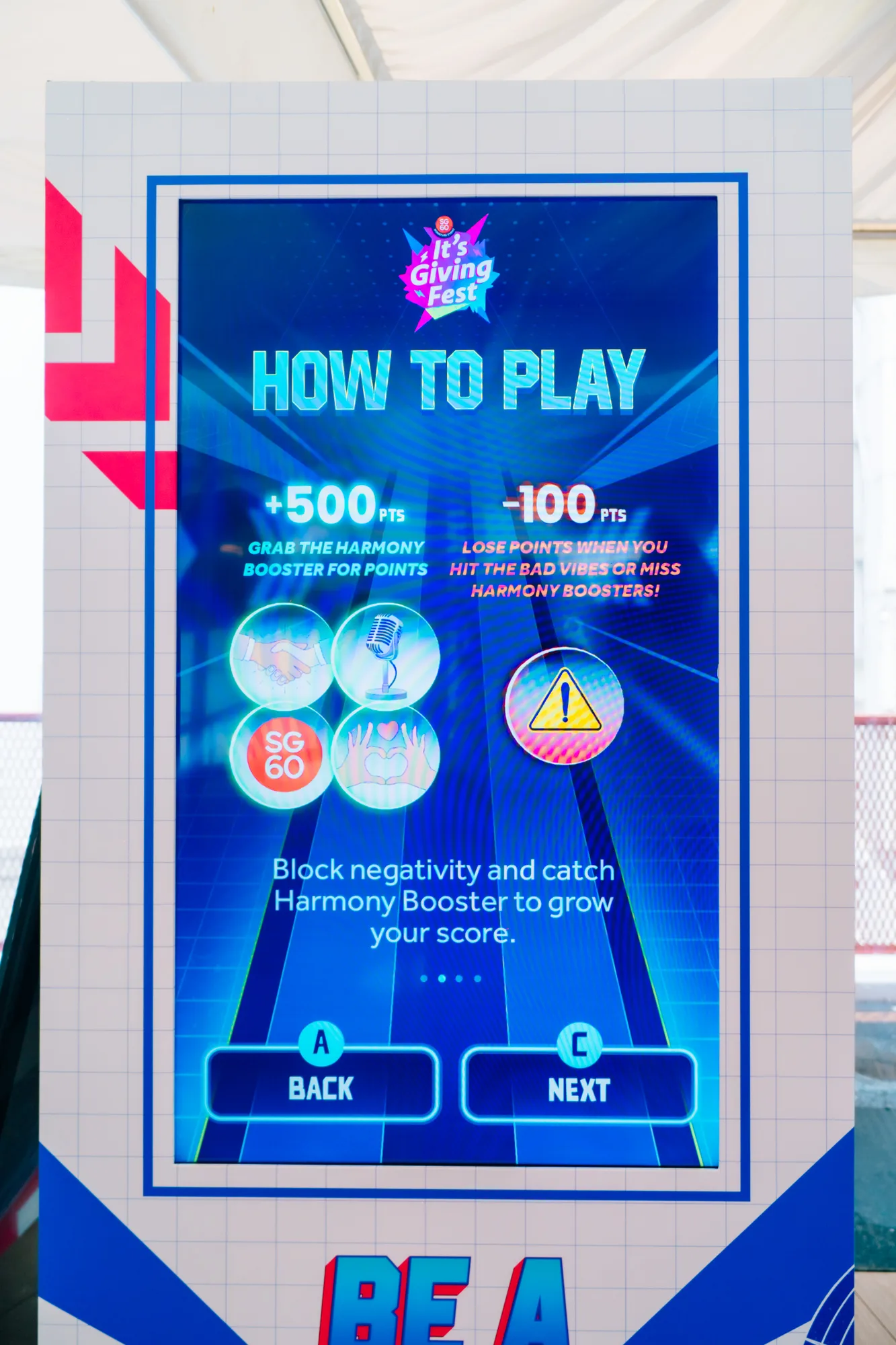
The instructions distinguish notes to hit from hazards to avoid.
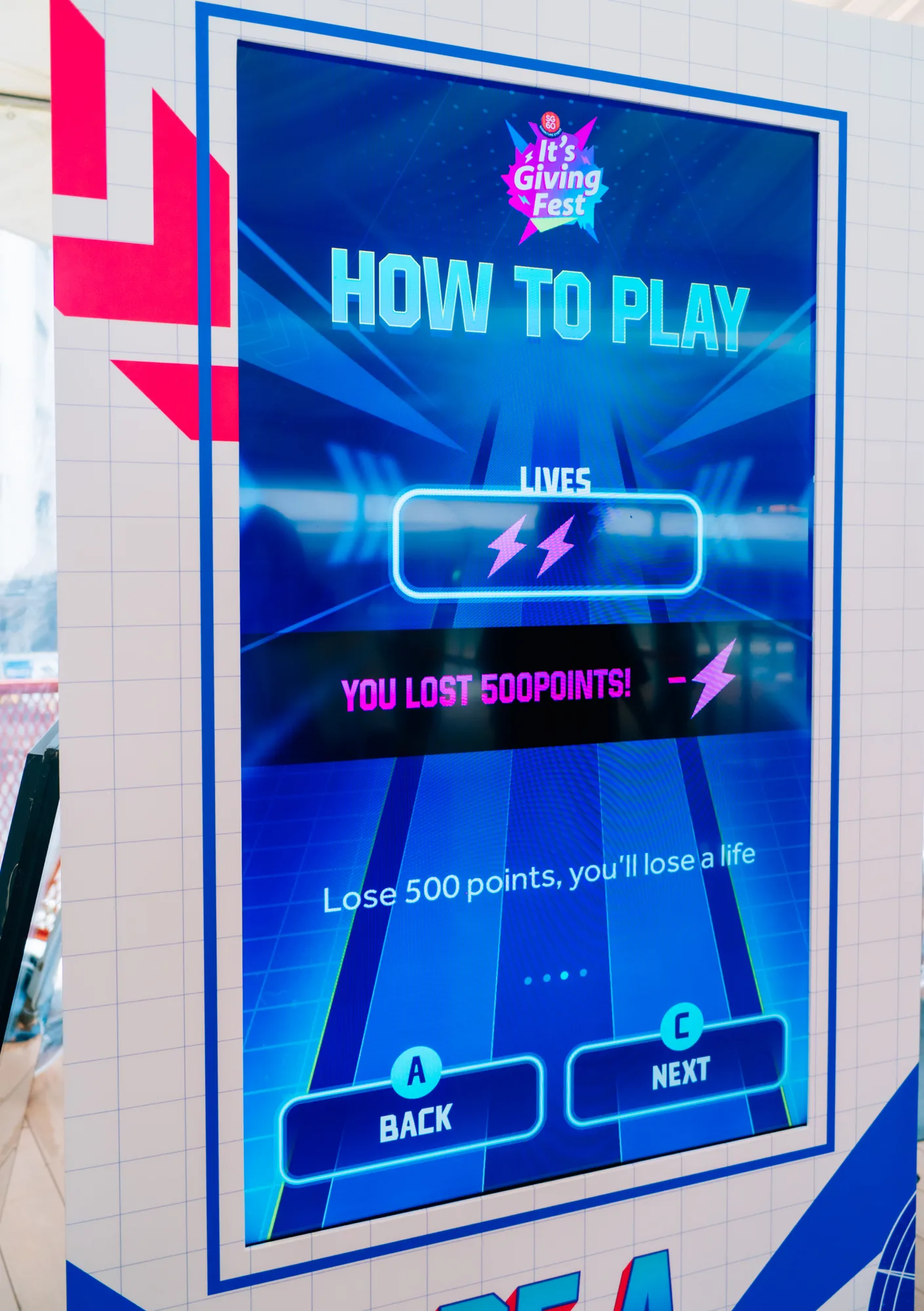
A further instruction explains the game's bonus mechanic.

Physical controls connect the rhythm prompts to a hands-on game.
FAQ
From creative customisation and software to onsite delivery. Here’s what to consider for your own project.
We can design musical cues and visuals around approved audio and the event identity. Difficulty should invite first-time participants while giving repeat players a satisfying timing challenge.
We test timing windows, input latency and score feedback with the actual playback system. Track completion and missed-note handling are defined before final tuning.
Confirm audio permissions, volume limits and neighbouring activities. Control durability, operator checks and a clear queue help keep the station usable throughout the event.
Send audio assets or licensing plans, preferred session length and venue conditions. Track count, note programming, control fabrication and operating support influence the scope.