

Strategy & Experience Design
Experience strategy and design, built around participation.
Give people a clear reason to take part. We turn your objective into an audience journey, a workable concept and an interaction the whole team can understand, prototype and build.
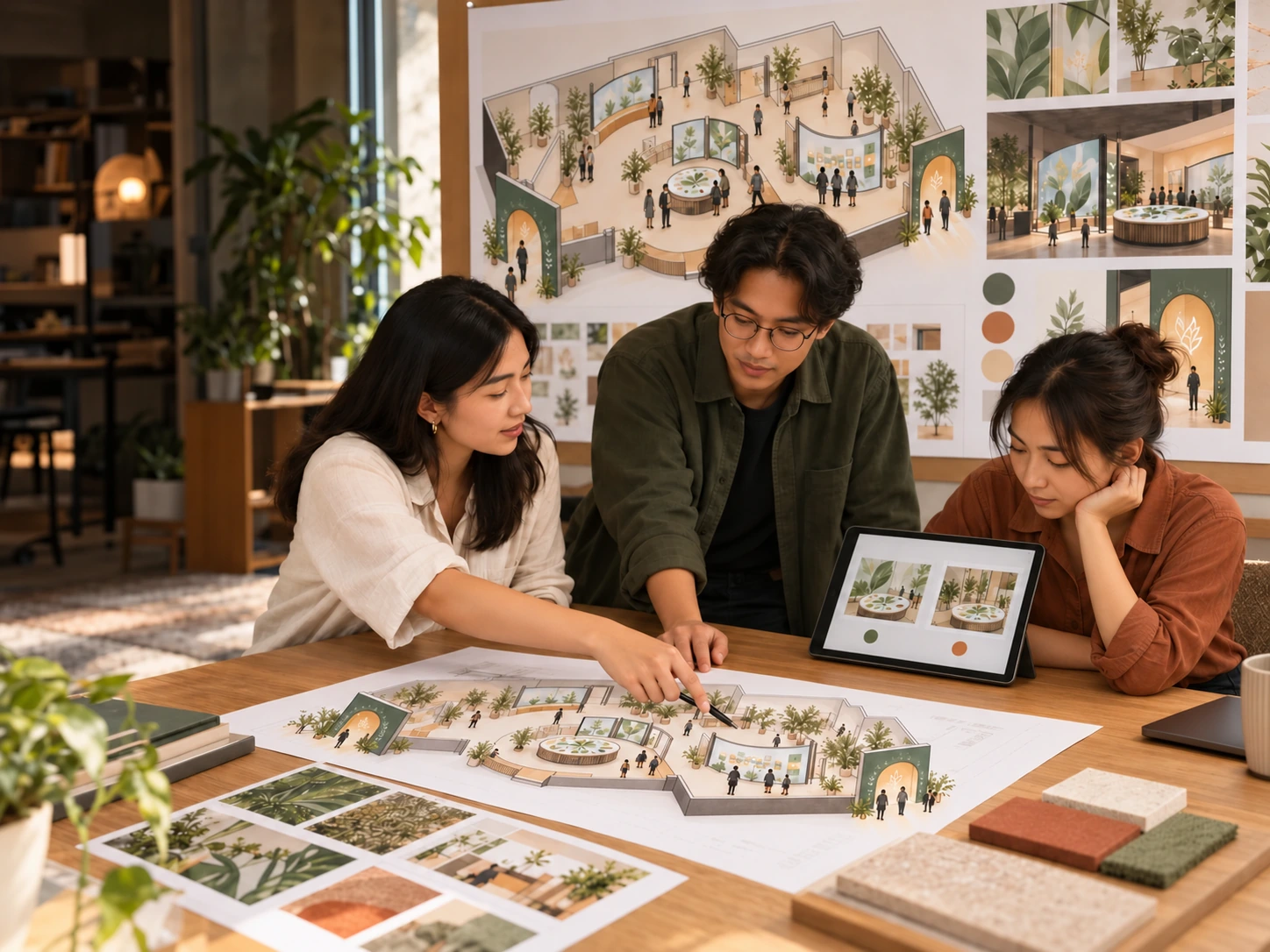
Follow the audience journeyIllustrative design workshop and exhibition concept.
Design the reason to interact

01 · Brief
Start withthe people.
Start with the people, the setting and the outcome. These decisions shape a focused brief before content, interfaces or equipment are chosen.
Illustrative exhibition journey · planning and review outputs are agreed for your brief.
01 · Brief
01 · Brief
Start with the people.
Start with the people, the setting and the outcome. These decisions shape a focused brief before content, interfaces or equipment are chosen.
Audience + setting + objective. We turn the starting questions into a focused experience brief, with an agreed participation idea and practical constraints.
02 · Invite
Make the invitation clear.
A clear view from the entrance draws visitors towards the first display. We shape the approach, visual cue and invitation so people know where to begin.
A visible starting point. We plan the first instruction, approach and expected action around a first-time visitor, making participation easy to understand.
03 · Interact
Make the response meaningful.
One clear choice leads to a visible response. Instructions, feedback and the next step belong to the same journey.
Action → response. We specify choices, content and feedback around the visitor’s task. A clear response shows what their action means and how to continue.
04 · Prototype
Try the critical moment.
Try the two choices. A focused prototype lets the team review instructions, responses and next steps before committing to the full experience.
A question we can test. We agree a task to test, observe how people use it and record the design decisions that follow.
05 · Direction
One direction. Ready to build.
The final route connects arrival, participation and exit. Concept, interface states and content requirements come together in a direction the team can build.
A coordinated handover. We organise the concept, content responsibilities, interaction specification and open dependencies so software, hardware and production teams can plan together.
A reason to take part.
A direction to build.
Experience strategy and design in Singapore, connecting audience, place and purpose. We help brands, agencies and institutions make the important decisions before production is locked.
Find the reason to interact
Start with who the experience is for and what people should understand or do. The brief, setting and practical constraints shape the idea before a device is selected.
Connect the whole journey
Make arrival, instructions, choices, feedback and exit work together. Interactive experience design gives each screen, physical touchpoint and human handoff a clear role.
Test the uncertain part
Use interaction design and prototyping to review the critical behaviour early. A focused task, observations and decision notes help refine the production direction.
From the starting question
to a shared direction.
A focused brief
Define the audience, objective, setting and constraints. Experiential campaign strategy and creative concept development give the team a participation principle to evaluate.
A connected interaction
Map the user journey and the role of each touchpoint. Specify the instructions, choices, feedback, content and handoffs that connect the idea to its intended use.
A reviewable direction
Prototype the uncertain behaviour and agree what to test. Bring the decisions, interface states, technical questions and content needs into a concept pack for production planning.
The exhibition and prototype are illustrative. Discovery, research, testing and production outputs are selected for the brief.
Different questions. Clearer ways to explore.
Format 1 of 5: Audience journey model
Audience journey model
Campaign experience model
Clickable kiosk prototype
Retail discovery prototype
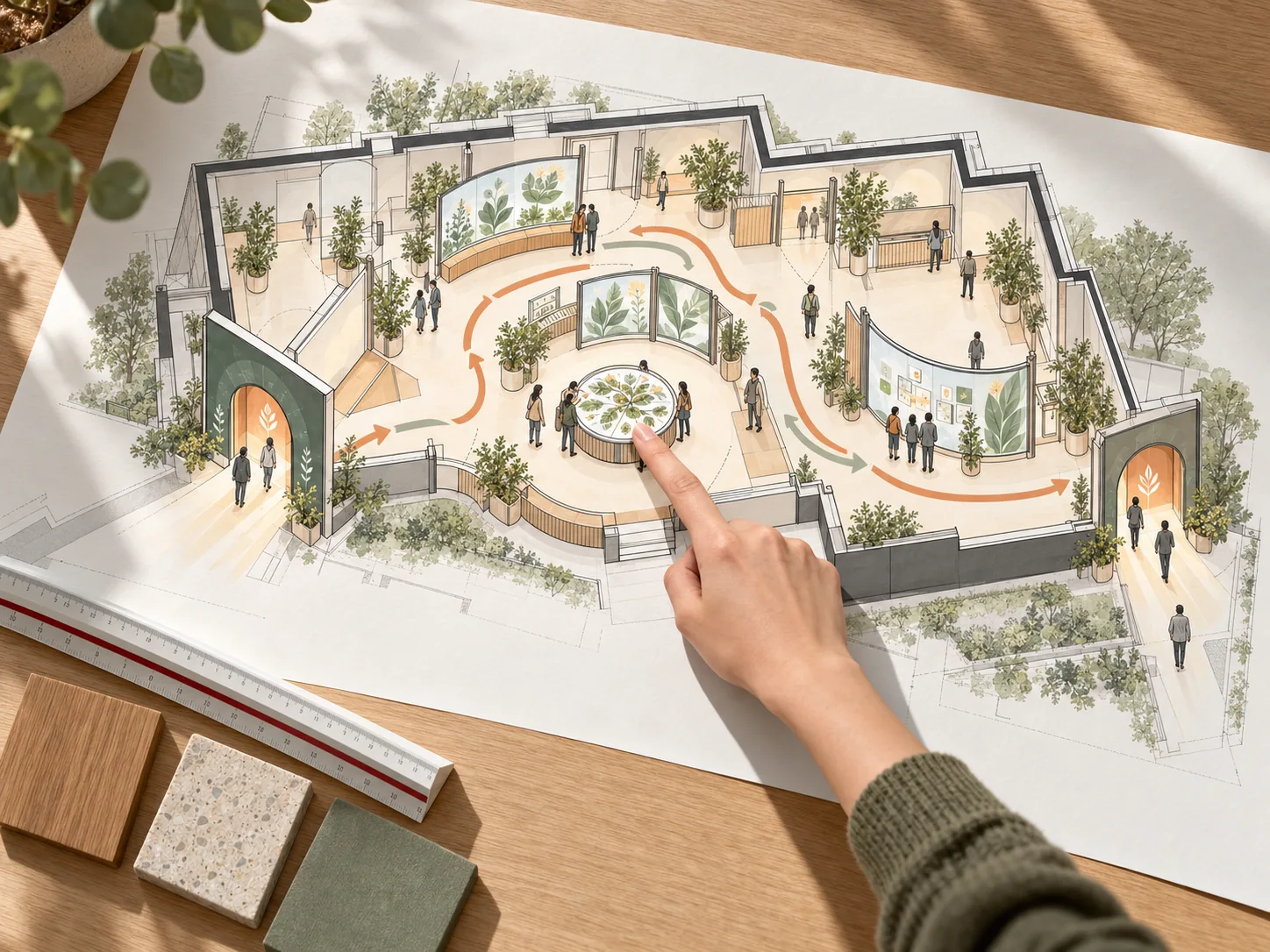
Exhibition layout prototype
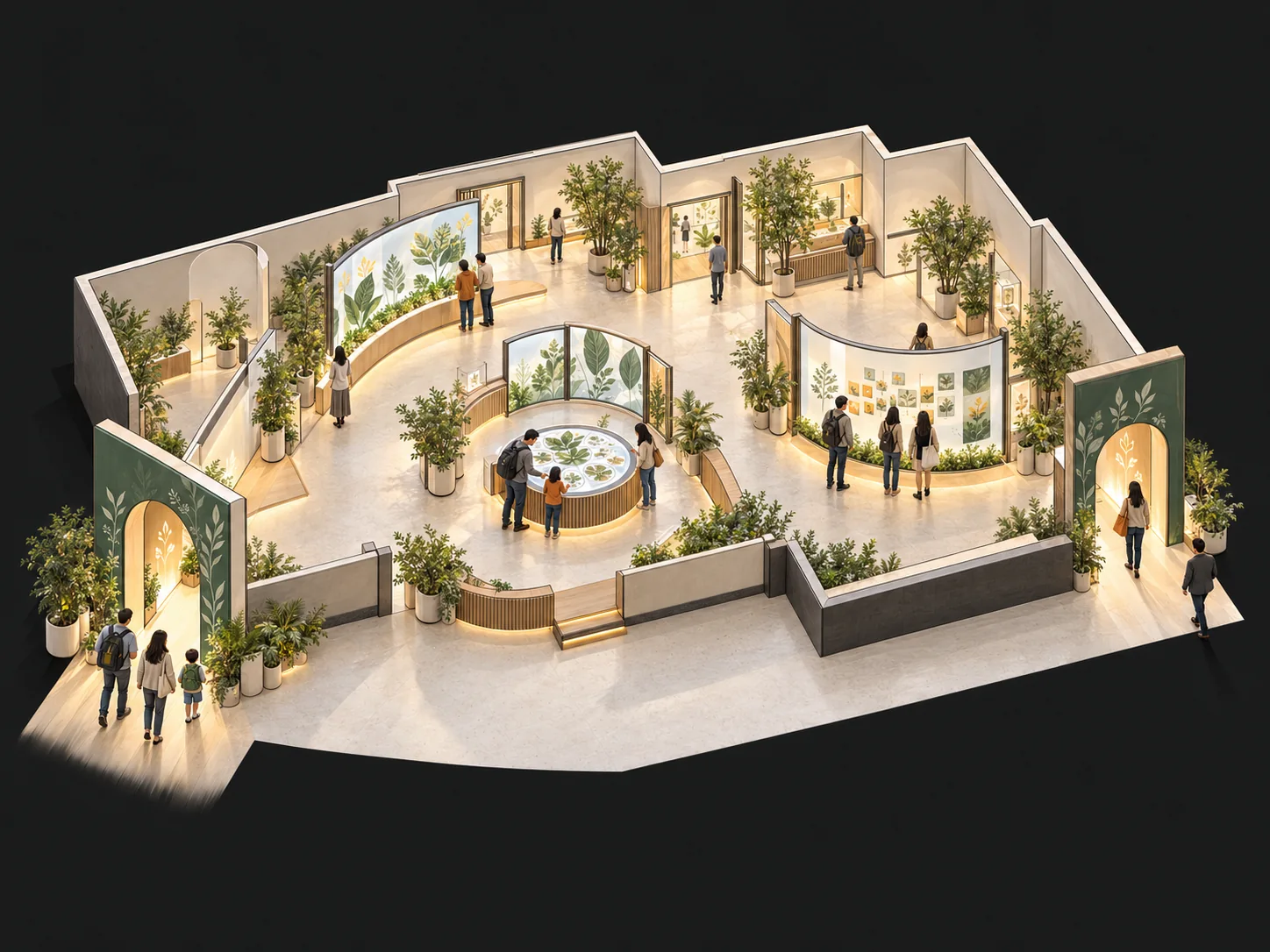
Audience journey model
Map the visitor’s arrival, invitation, interaction and continuation within the intended setting. The botanical exhibition is a fictional example, used to make the planning decisions visible.
Campaign experience model
Connect the campaign objective, audience and participation idea before production is fixed. A focused brief and concept direction help the creative and technical teams discuss the same intended experience.
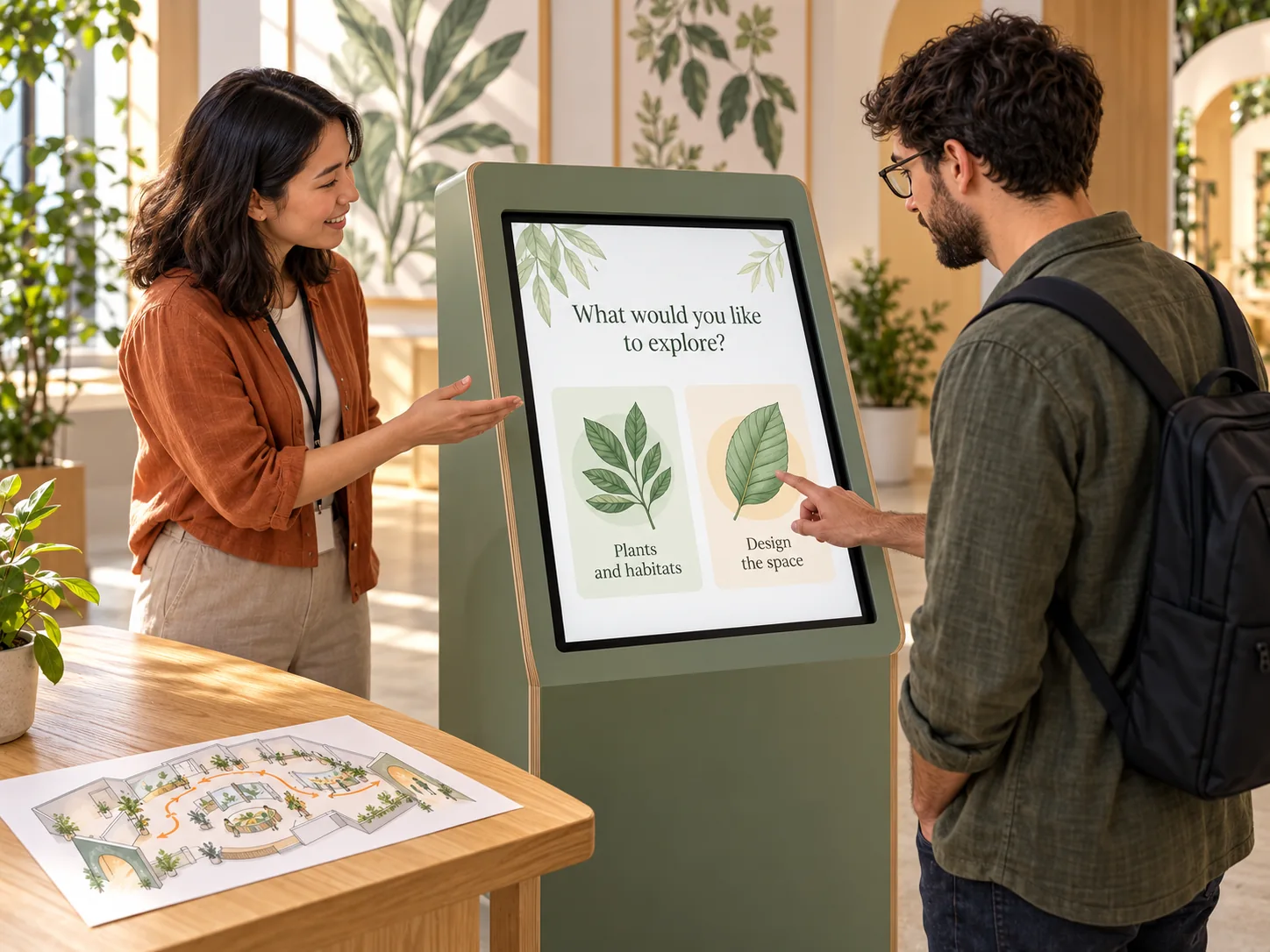
Clickable kiosk prototype
Make key interface states and feedback reviewable around an agreed visitor task. The prototype lets the team evaluate a behaviour; it does not stand in for testing the complete installation.
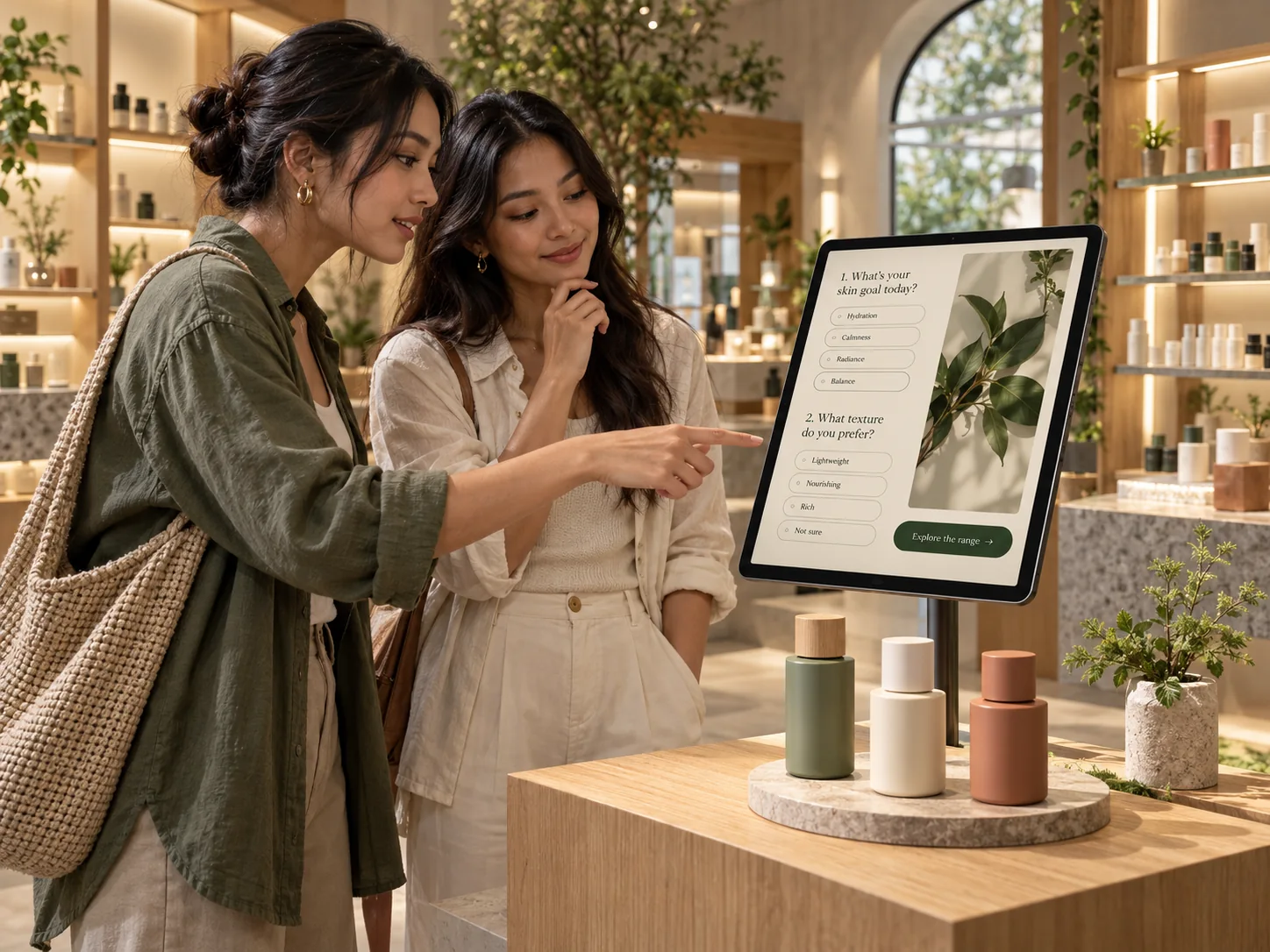
Retail discovery prototype
Explore how a product question leads to a useful interaction in the retail setting. We connect the physical display, interface choices and content around the brief and the questions the prototype needs to answer.
Exhibition layout prototype
Review circulation, sightlines, touchpoint positions and continuation as one venue journey. Dimensions, accessibility, operating requirements and technical constraints are confirmed for the actual space.
Five example planning and prototype directions, with outputs and review tasks agreed for the project.
Audience journeys,
in practice.
Two documented experiences where a clear action connects the interface, content and setting.
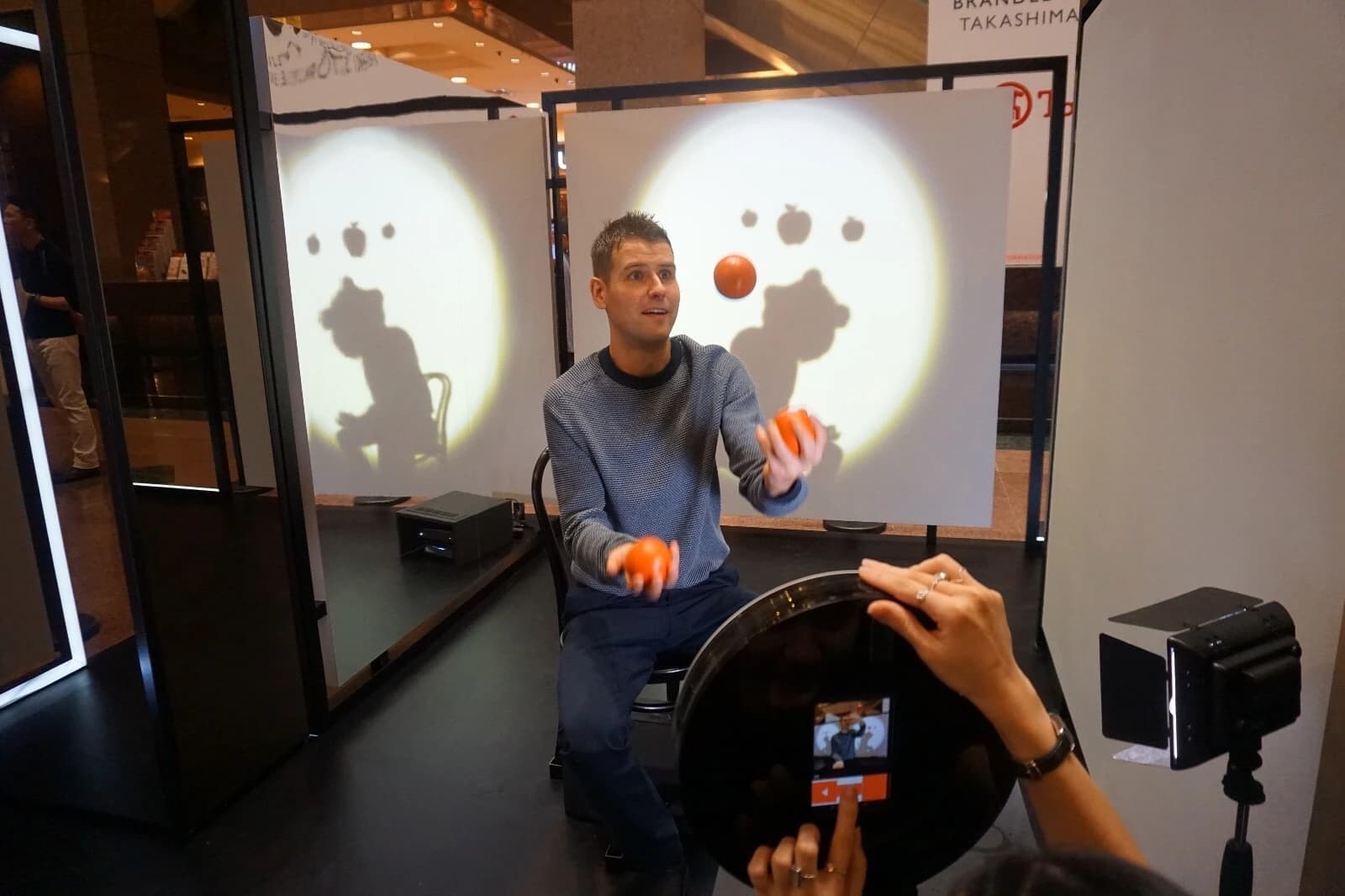
Hermès Projection Photobooth
A capture, projection and reveal journey, shaped around an audience action and a luxury brand setting.
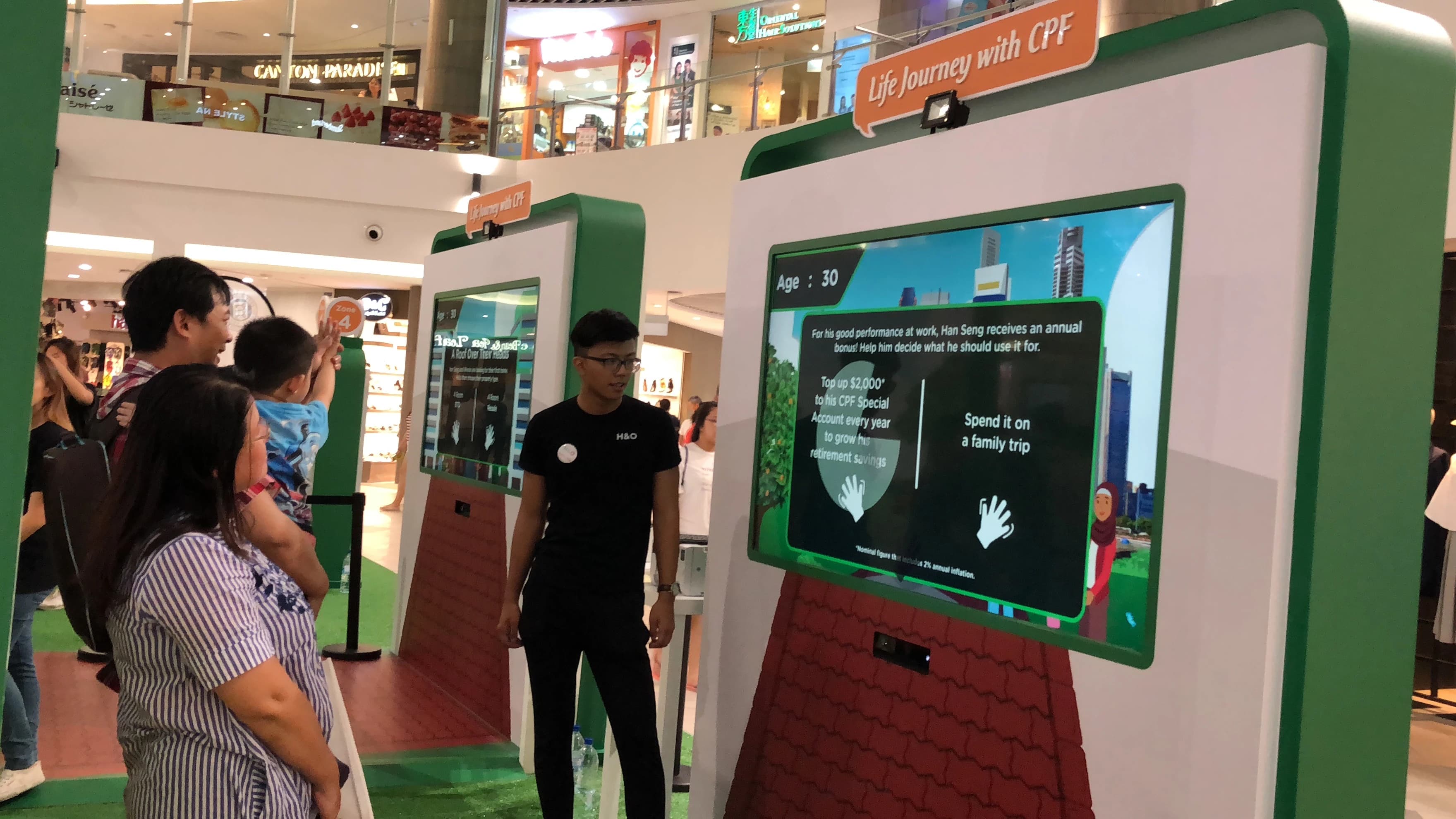
CPF Roadshow Interactive Story
A guided touchscreen story that organises complex information around relatable choices and life-stage scenarios.
Before the direction is set.
Can we start before the technology is decided?
Yes. Start with the audience, setting and objective. We can scope campaign strategy, concept development, user journeys and rapid prototypes to establish which decisions need discovery or testing before production.
Can you build on our agency’s idea?
Yes. We agree what is already fixed and where interaction design, content structure or feasibility still need work. The aim is a buildable audience journey that respects the creative brief and each team’s responsibilities.
What will we be able to review?
Depending on scope: a focused experience brief, concept direction, annotated journey, interface states, prototype and decision notes. We agree the outputs and review points around the decisions your project needs to make.
What does a prototype tell us?
A focused prototype makes a specific behaviour or technical question testable. We agree the task, observations and decision it should inform. Its findings apply to what was tested, rather than automatically validating the full experience.
How does the direction move into production?
We connect the approved journey to content, interface behaviour and the technical and physical requirements. Responsibilities, dependencies and remaining questions are documented for the teams planning the build.
Give the ideaa clear direction.
Tell us the objective, intended audience, setting and the interaction you are considering.
Shape your audience journey