

Creative Technology Consultancy & R&D
Test the unknown. Plan what comes next.
Creative technology consultancy in Singapore, built around your next decision. We compare practical routes, prototype the uncertain interaction and turn what is learned into a clearer production plan.
Follow the investigationIllustrative sensor feasibility setup.
Test the unknown before the build.
01 · Question
Start witha real unknown.
Could a visitor move an object and see the artwork respond? Define the interaction, then identify the assumption that could change the build.
Proposed investigation
Can movement
become an input?
- Action
- Move a physical sample
- Response
- Change the screen artwork
- Question
- Which sensing route fits?
Proposed investigation · no physical sensing or measured findings represented.
01 · Question
01 · Question
Start with a real unknown.
Could a visitor move an object and see the artwork respond? Define the interaction, then identify the assumption that could change the build.
A decision worth testing. For this proposed trial: can the chosen sensing route follow the sample in the intended space?
02 · Routes
Same question. Different routes.
Compare sensing approaches against the same brief. Each changes what visitors can do and what the installation needs.
Make the trade-offs visible. A camera needs a clear view. An object reader needs a compatible tag. Neither route is selected before the actual objects and setting are reviewed.
03 · Prototype
One question. A useful proof.
Move the sample through a proposed sensing area. Review a clear input and response before designing the complete installation.
Test one assumption. This local simulation explains the trial. Real sensing still needs a physical test.
04 · Learning
Keep the finding. Name the limit.
A response in one condition does not prove the whole installation. Compare the proposed clear and obstructed views, then identify what still needs testing.
Evidence before confidence. Lighting, materials, multiple visitors and recovery behaviour belong in the actual test plan. No accuracy or readiness claim is implied here.
05 · Next steps
Give the idea a production path.
Translate the test into a technical direction, known limitations and a phased plan. The team can proceed, revise the idea or stop an unsuitable route.
A useful handoff. Agree the architecture, owners, remaining validation and production scope. A prototype and a production-ready system are different deliverables.
A better question.
A clearer decision.
An interactive experience feasibility study starts with a useful question. Which assumption could change the design, cost or production route? We help creative, technical and commercial teams define that question, review the options and agree what evidence would support the next decision.
Make the uncertainty specific
Turn an ambition into testable questions about the audience action, environment or system connection. A discovery brief, assumptions register and focused test plan keep the investigation connected to a real decision.
Compare the routes that fit
Review relevant sensing, display or software approaches against the same experience needs, integration constraints, budget and schedule. Explain the trade-offs and dependencies behind the recommendation.
Prove the part that matters
Use interactive technology prototyping to investigate one input, response or integration boundary. Record what the prototype demonstrates, what it does not, and the further work needed before production.
From the unknown
to the next commitment.
Define the investigation
Agree the creative ambition, intended setting, uncertain behaviour and decision point. Set a bounded feasibility scope with useful observations, dependencies and outputs before the prototype work starts.
Build + review the proof
Develop the smallest useful proof of concept, whether it is a sensing interaction, AR tracking task, kiosk journey or connected-system response. Review behaviour and limitations against the agreed question; an unsuitable route is also a useful outcome.
Plan the next commitment
Document the recommendation and remaining work across experience design, software, physical integration and deployment. Architecture and production planning make responsibilities and further testing visible before the team commits to a full build.
Creative technology research and development is scoped around the actual question. The trial shown is proposed; measured findings and production readiness require recorded physical testing.
Different questions. Useful prototypes.
Format 1 of 5: Sensor proof of concept
Sensor proof of concept
AR device trial
Interactive kiosk prototype
Connected system demo
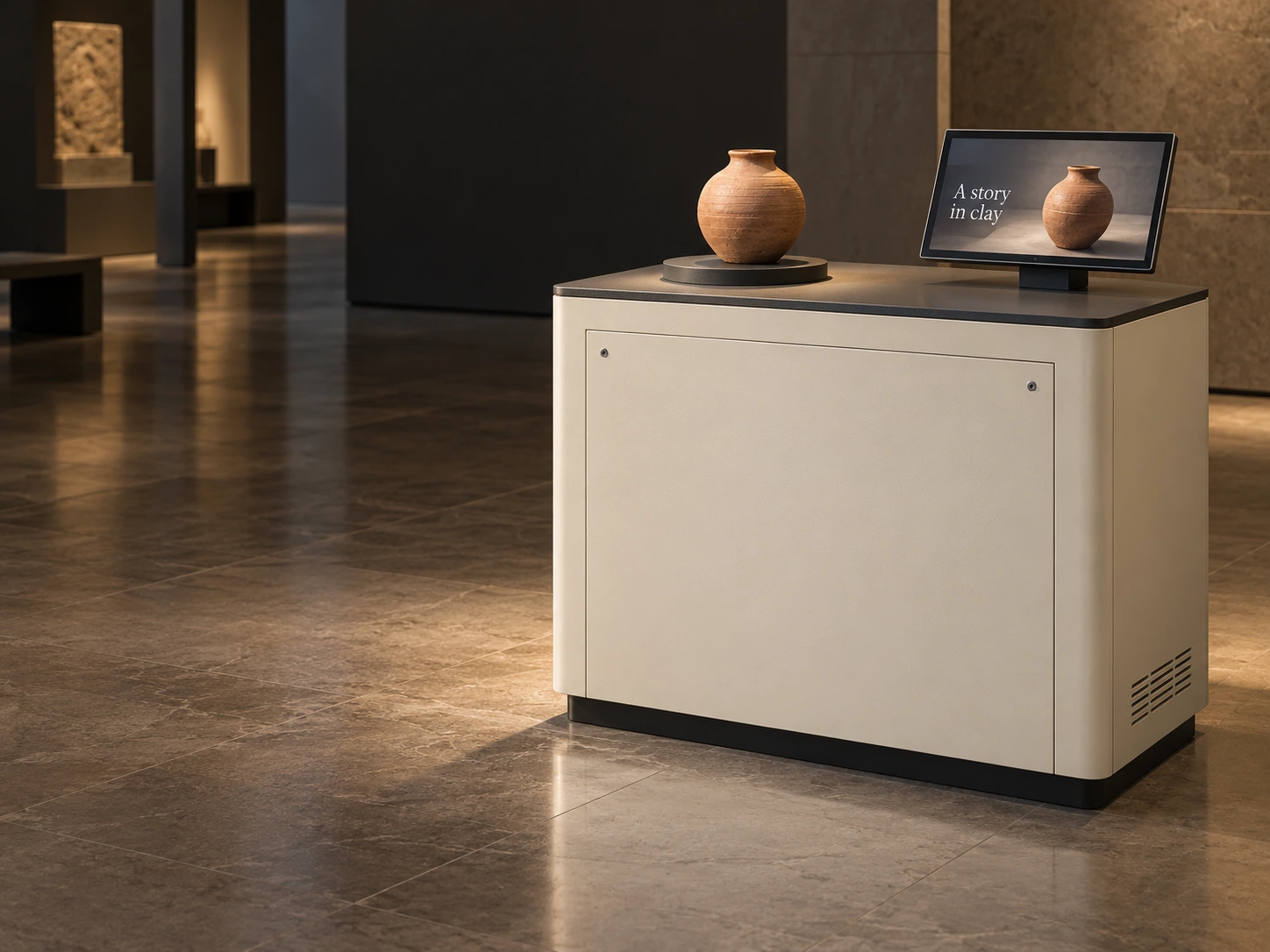
Production readiness model
Sensor proof of concept
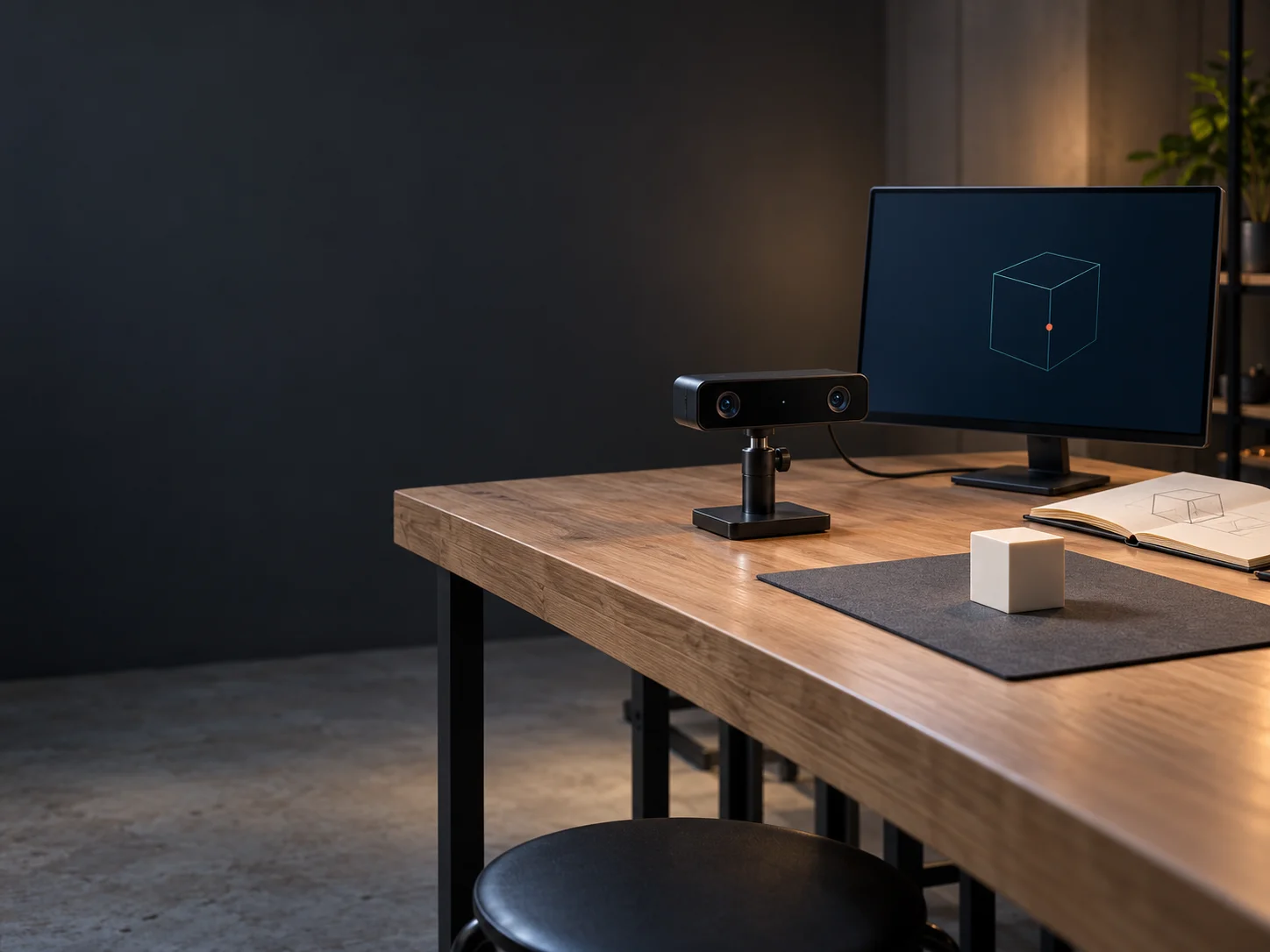
Investigate one sensing question with a realistic sample, mounting position and proposed observation record. Object material, lighting and interference are conditions to test, rather than assumed successes. The bench shown is an illustrative setup.
AR device trial
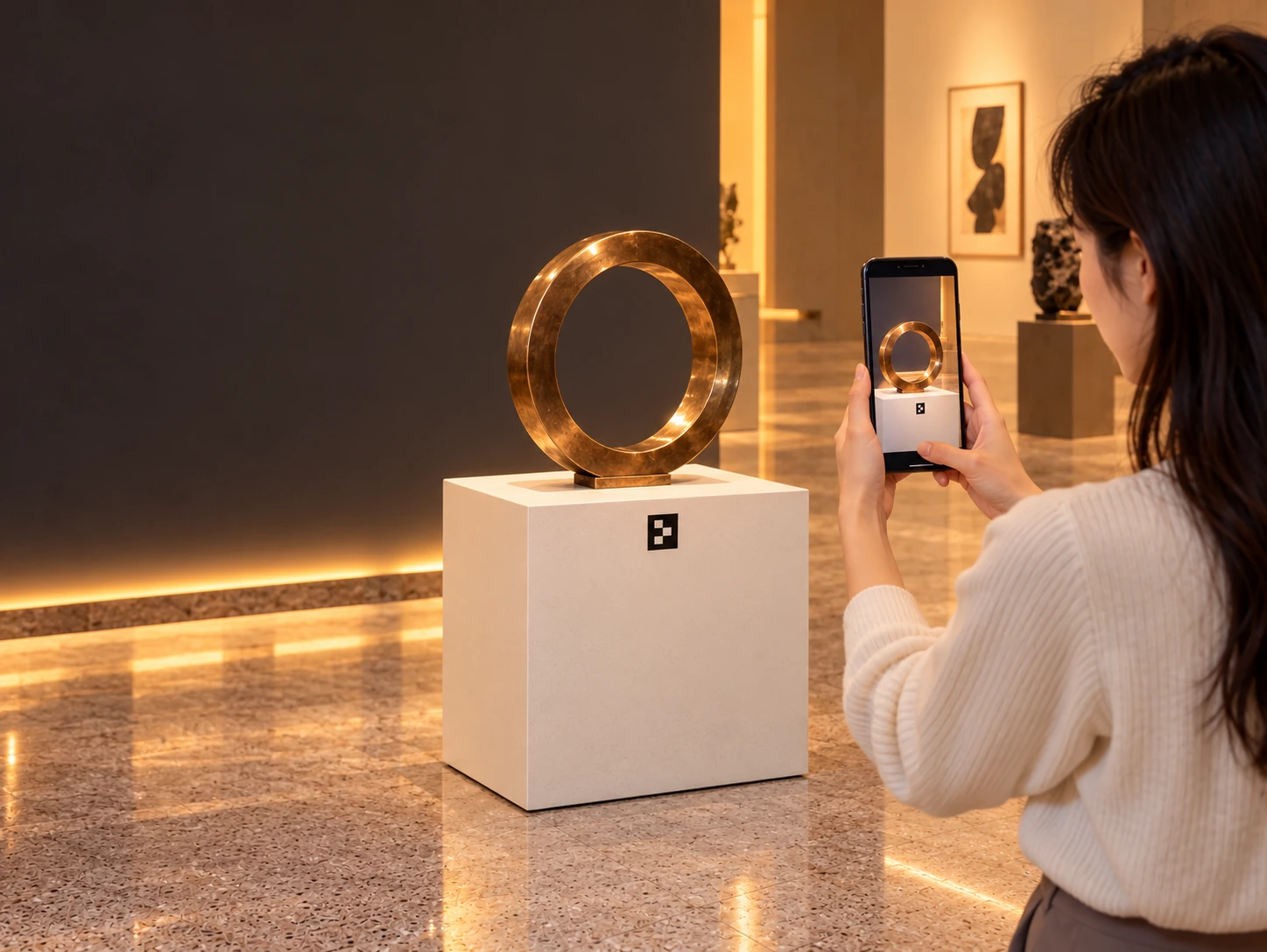
Review the tracking task, camera view and interaction on the relevant phones or tablets. A focused AR prototype helps define the device and environment test plan. Compatibility and tracking behaviour require actual testing with the chosen devices.
Interactive kiosk prototype
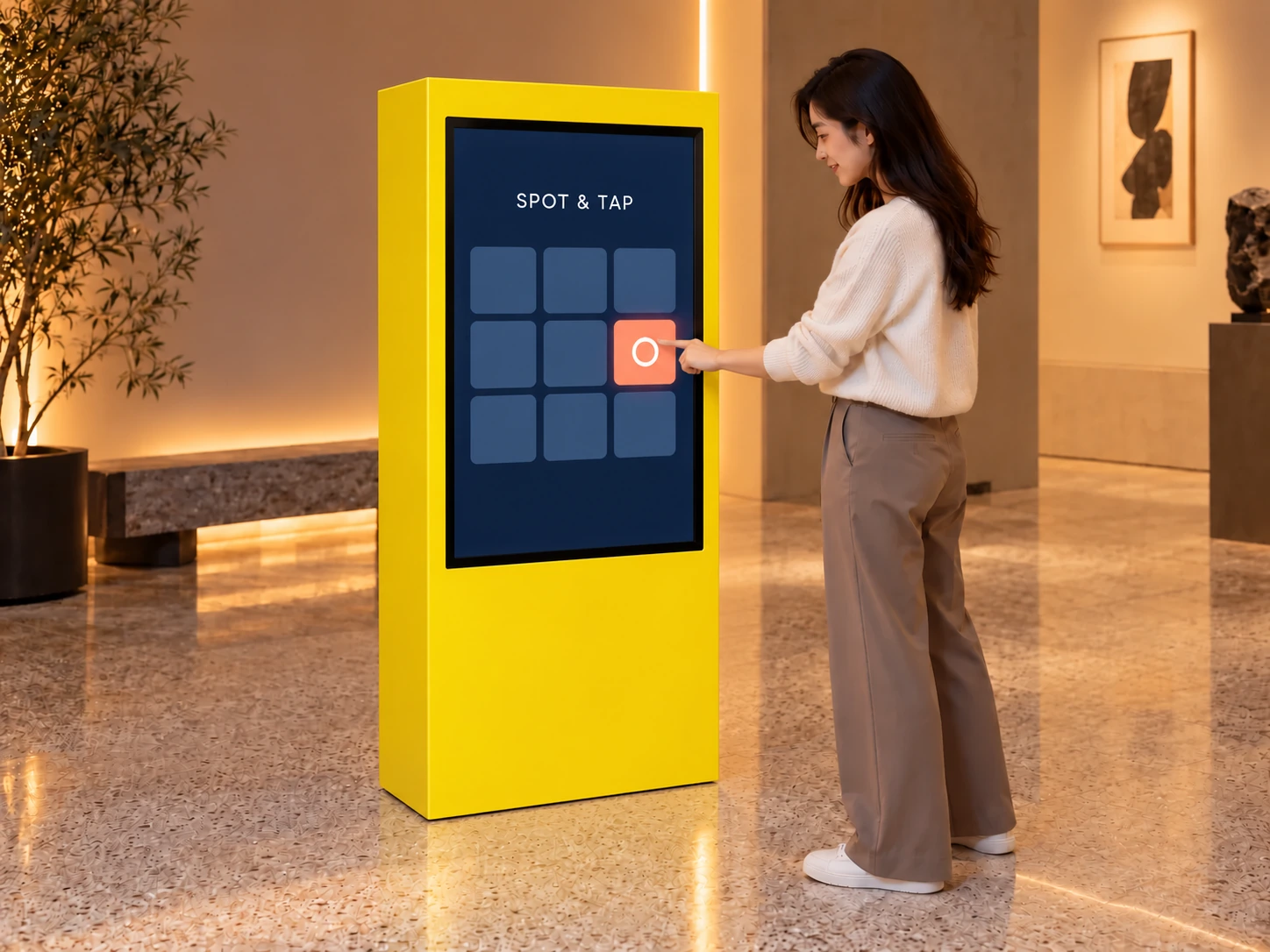
Make a short task clickable before developing the complete kiosk application. Review the invitation, choices, feedback and reset behaviour with a defined question. User observations are future trial outputs; the pictured game is an illustrative format.
Connected system demo
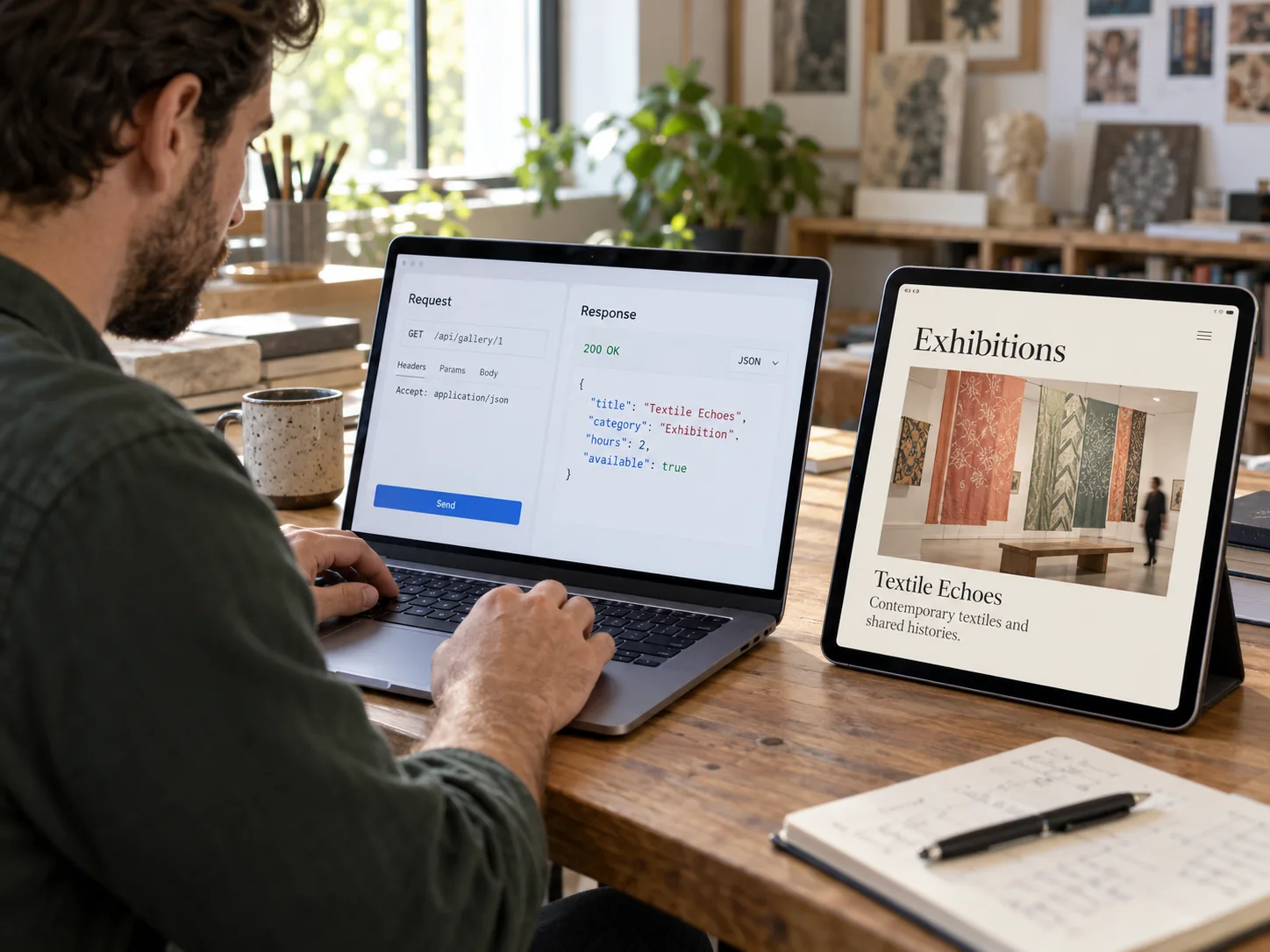
Investigate a request, response and recovery boundary with an agreed data contract. Review the expected states and error scenarios before expanding the integration. Real system access, ownership and test evidence remain dependencies.
Production readiness model
Bring site constraints, component options, mounting and service access into a planning model. Identify what the prototype proves and what still needs engineering or commissioning. Final costs, specifications and schedule remain project decisions.
Five illustrative investigations. Trial outputs, test conditions and the decision point are agreed before work begins.
Technical ideas.
Installed experiences.
Related executions show the kinds of interaction we work with. They are not presented as documented R&D studies.
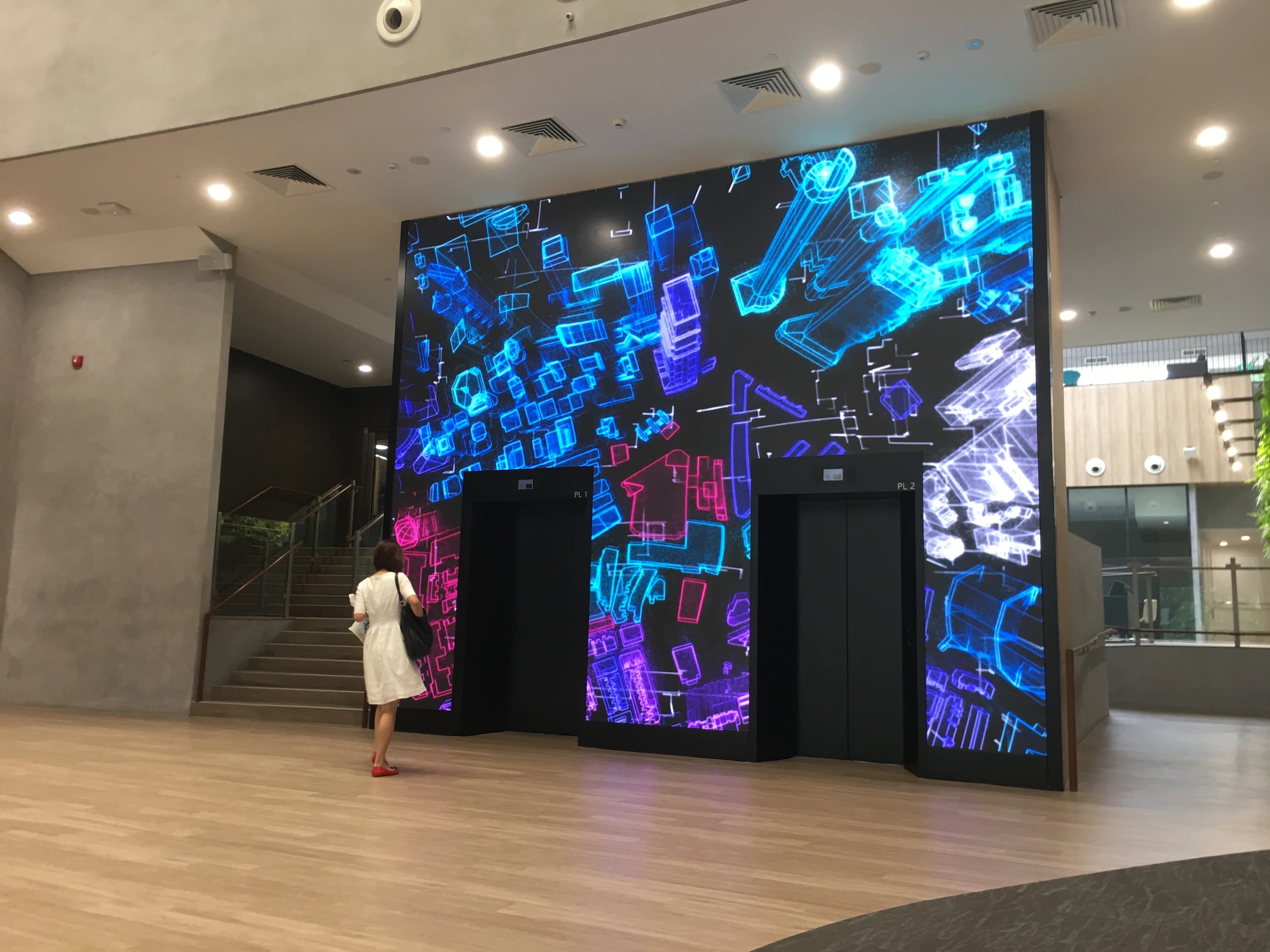
NUS Generative Art Wall
Generative design, software and systems integration within an architectural display. An execution example; the public case does not document a feasibility study or prototype findings.
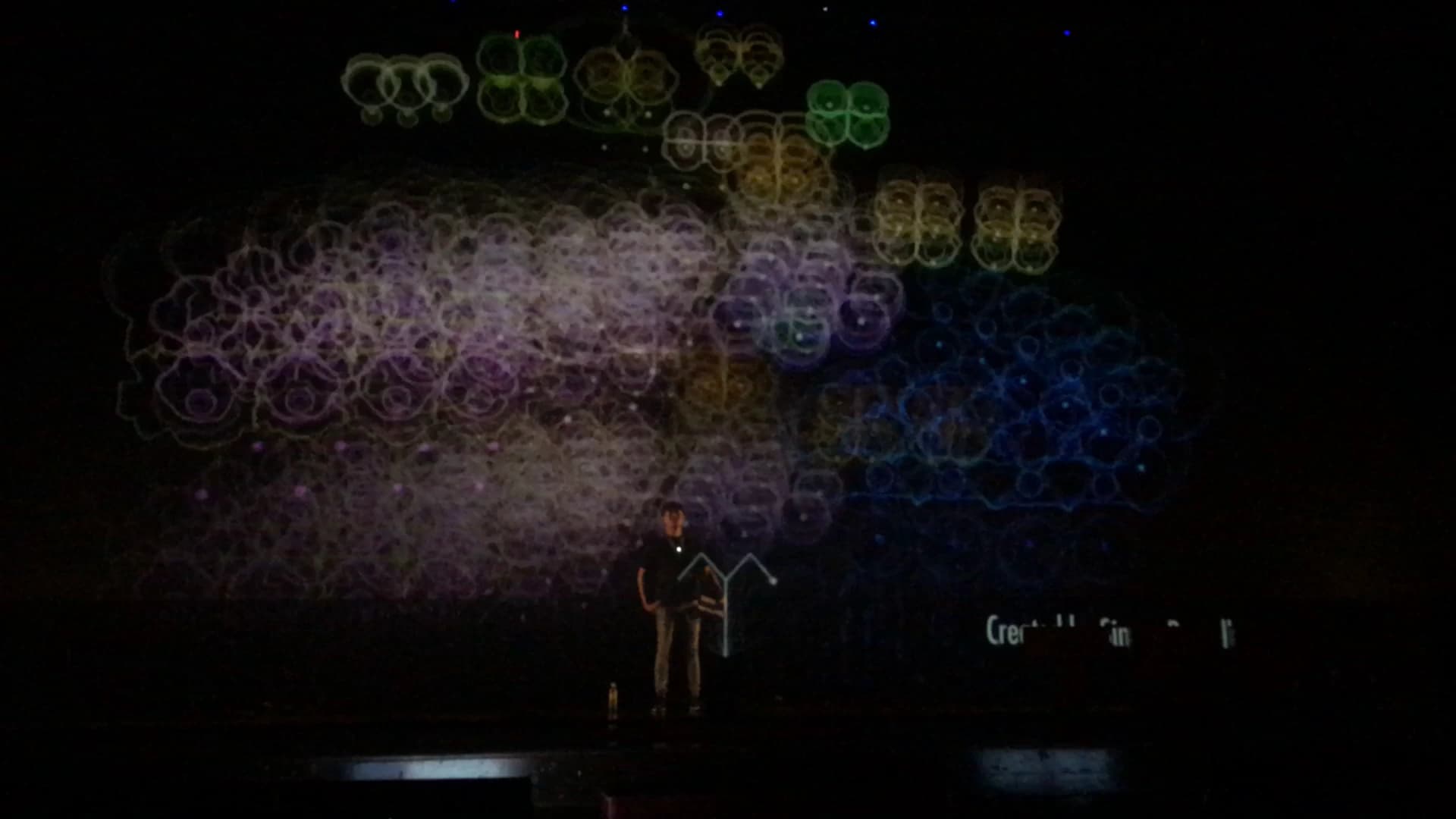
TEDx Interactive Hologram Projection
Motion tracking, real-time graphics and hologram-style projection for a presenter-led interaction. An execution example, without claims of volumetric holography or specific research results.
Before the full build.
Can R&D start before we commit to an installation?
Yes. Technical discovery, feasibility work and proofs of concept can be scoped as separate deliverables. We agree the question, test boundary, output and decision point first. A later production engagement is scoped separately.
What do you need to begin?
Share the idea, the uncertain part, the intended setting and the decision your team needs to make. Existing content, object samples, system access, venue constraints, budget and timing help define a useful investigation.
Does a working prototype mean production-ready?
No. It demonstrates only the behaviour and conditions tested. A production system may still need application engineering, content, device testing, physical integration, commissioning and an operating plan. The handoff makes that remaining work explicit.
What if the idea does not work?
The investigation can recommend a different route, a narrower scope or stopping an unsuitable approach. We separate observed behaviour from assumptions so the team can make a practical decision without treating every demo as a success.
What will we receive?
The agreed scope may include a discovery brief, feasibility recommendation, prototype, observation record, technical architecture and phased production plan. Outputs state their limitations, dependencies and further validation needs.
Bring the idea.Name the unknown.
Tell us the intended experience, the uncertain part and the decision your team needs to make.
Test your technical unknown