Mediacorp Balance Builder Game
A body-pose game that invited Mediacorp event visitors to match a silhouette and hold their balance in front of a large screen.
- Motion interaction
- Game software
- Play-zone setup
- Event deployment


A body-pose game that invited Mediacorp event visitors to match a silhouette and hold their balance in front of a large screen.
Singapore
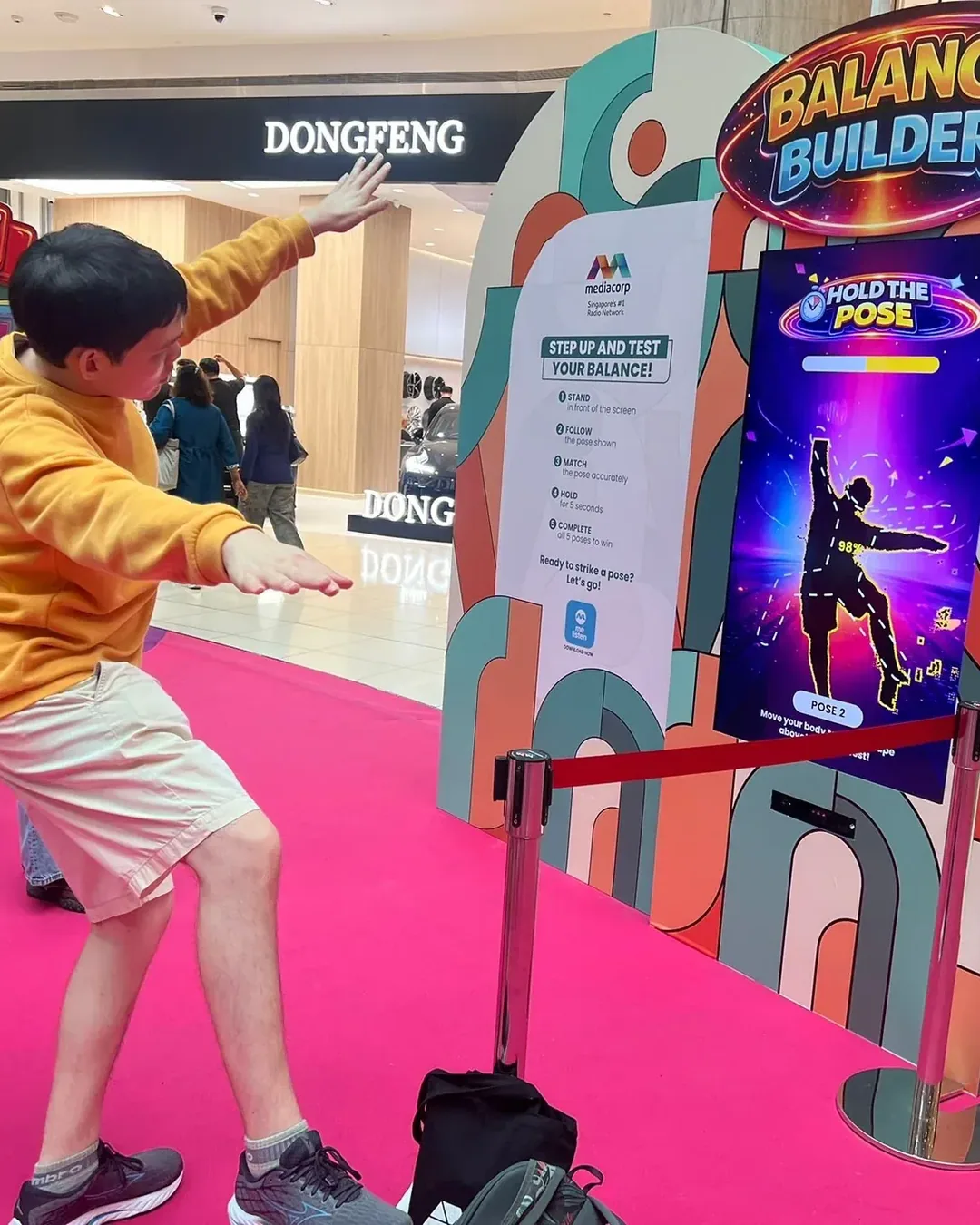
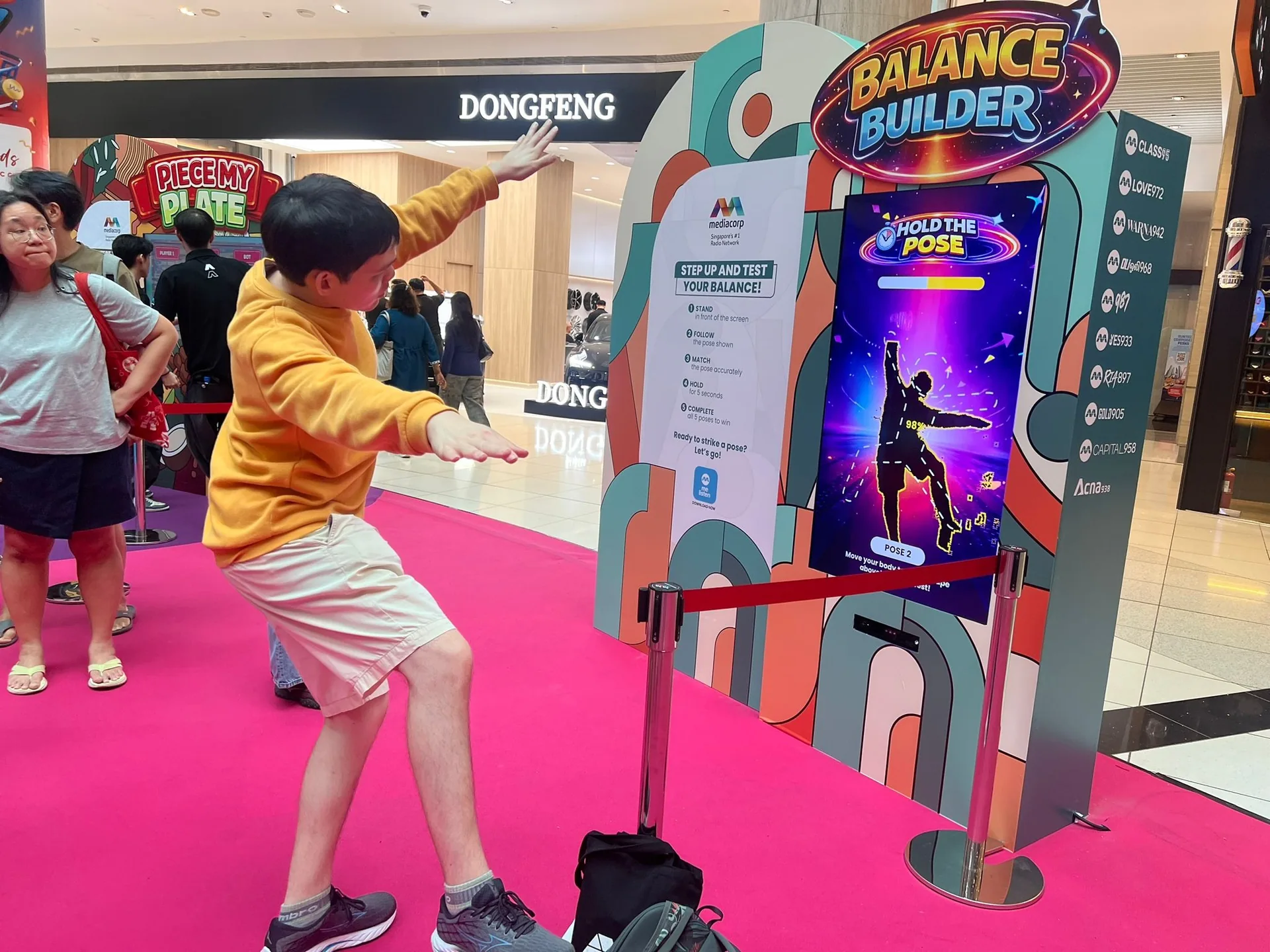
The Balance Builder station paired a portrait silhouette playfield with an open position in front of the screen. Visitors copied the displayed pose while the game showed their response within the target shape.
Make a movement and balance challenge understandable to a wide range of visitors without handing them a controller.
The hardware
Connects physical action with the game response.
Makes the challenge visible to players and the audience.
Provides the space needed for the intended movement.
The software
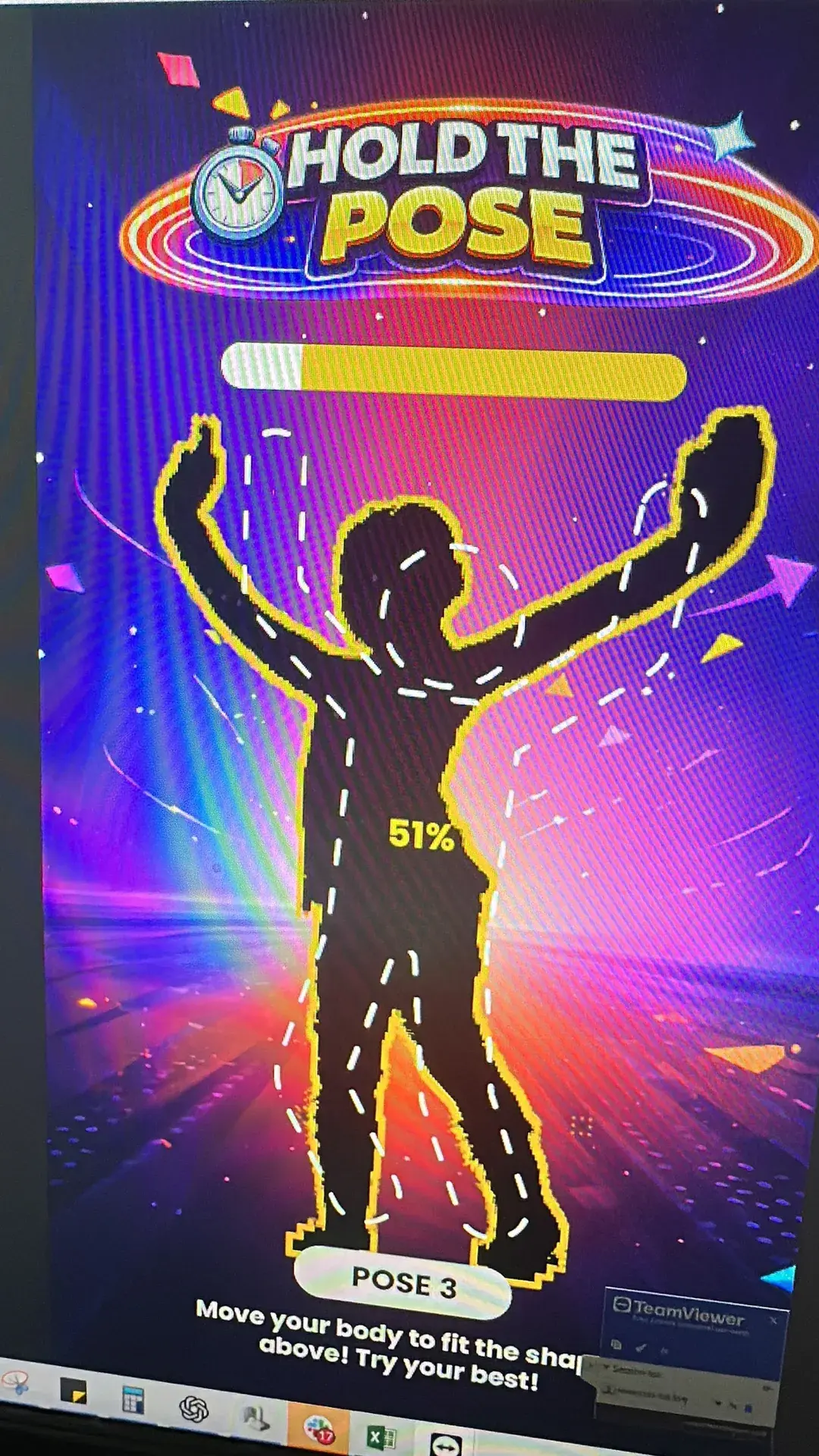
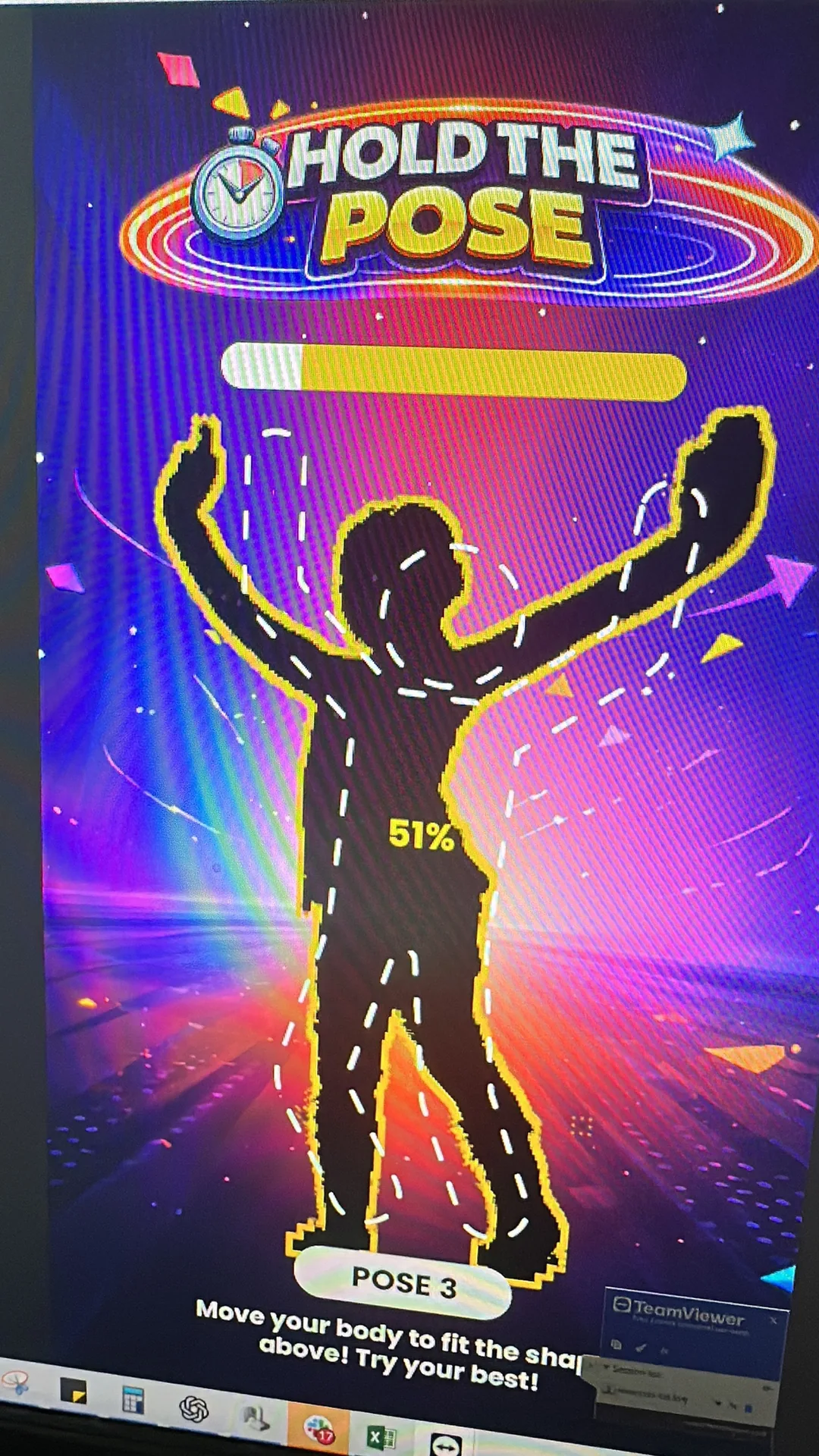
Body-position input is compared with the active pose. The application presents the target, checks the held position and advances the session feedback, making the link between physical movement and screen response visible.
Enter the marked play area in front of the Balance Builder screen.
Move the arms and body to follow the displayed pose.
Keep the position while the game checks the held pose.
See the finishing response and clear the play area for the next visitor.
The finished experience
The visitor’s own body became the controller, creating a challenge that nearby families and friends could follow.
 Video
Watch the calibration, pose prompts and balance-game feedback.
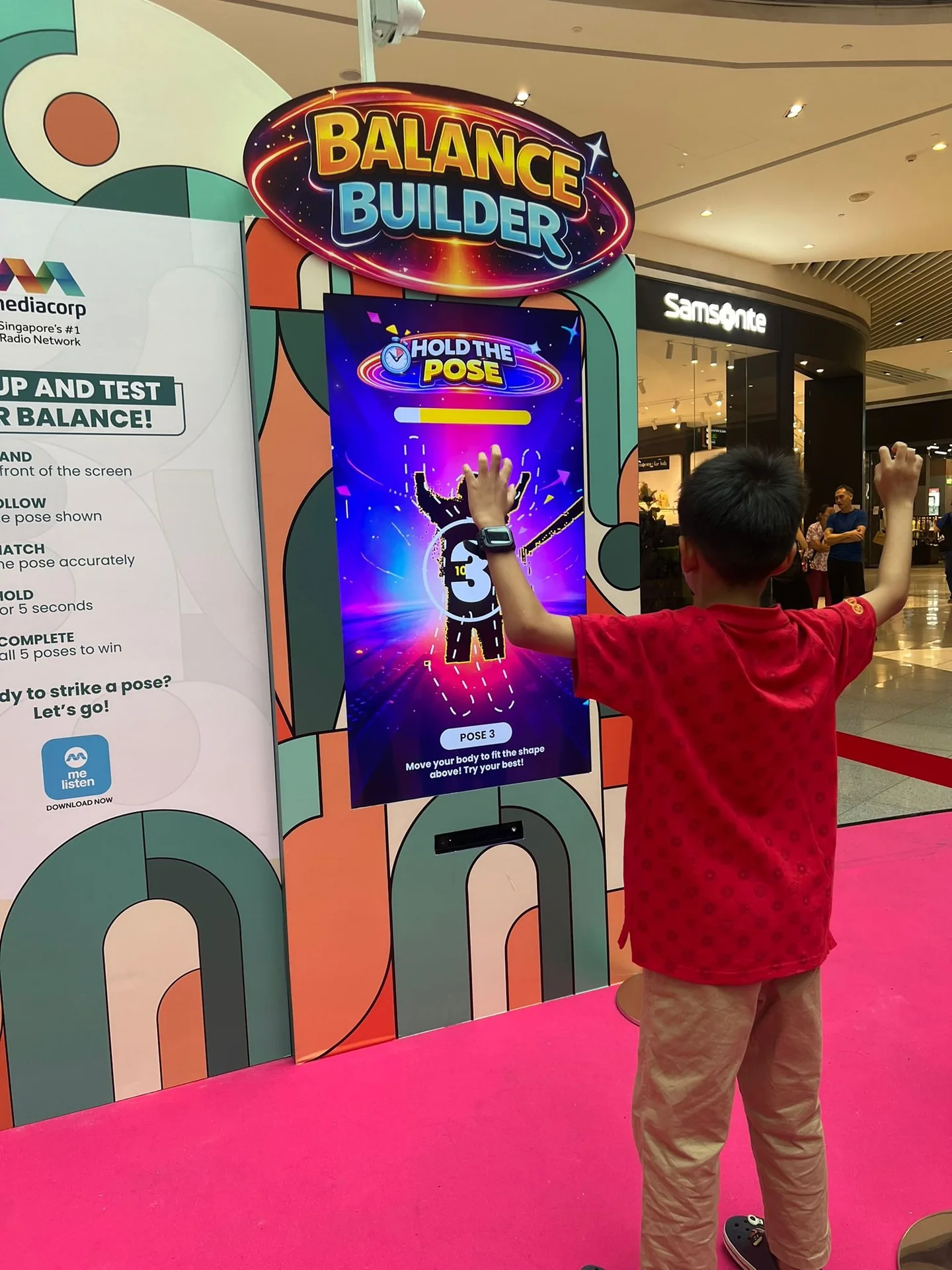
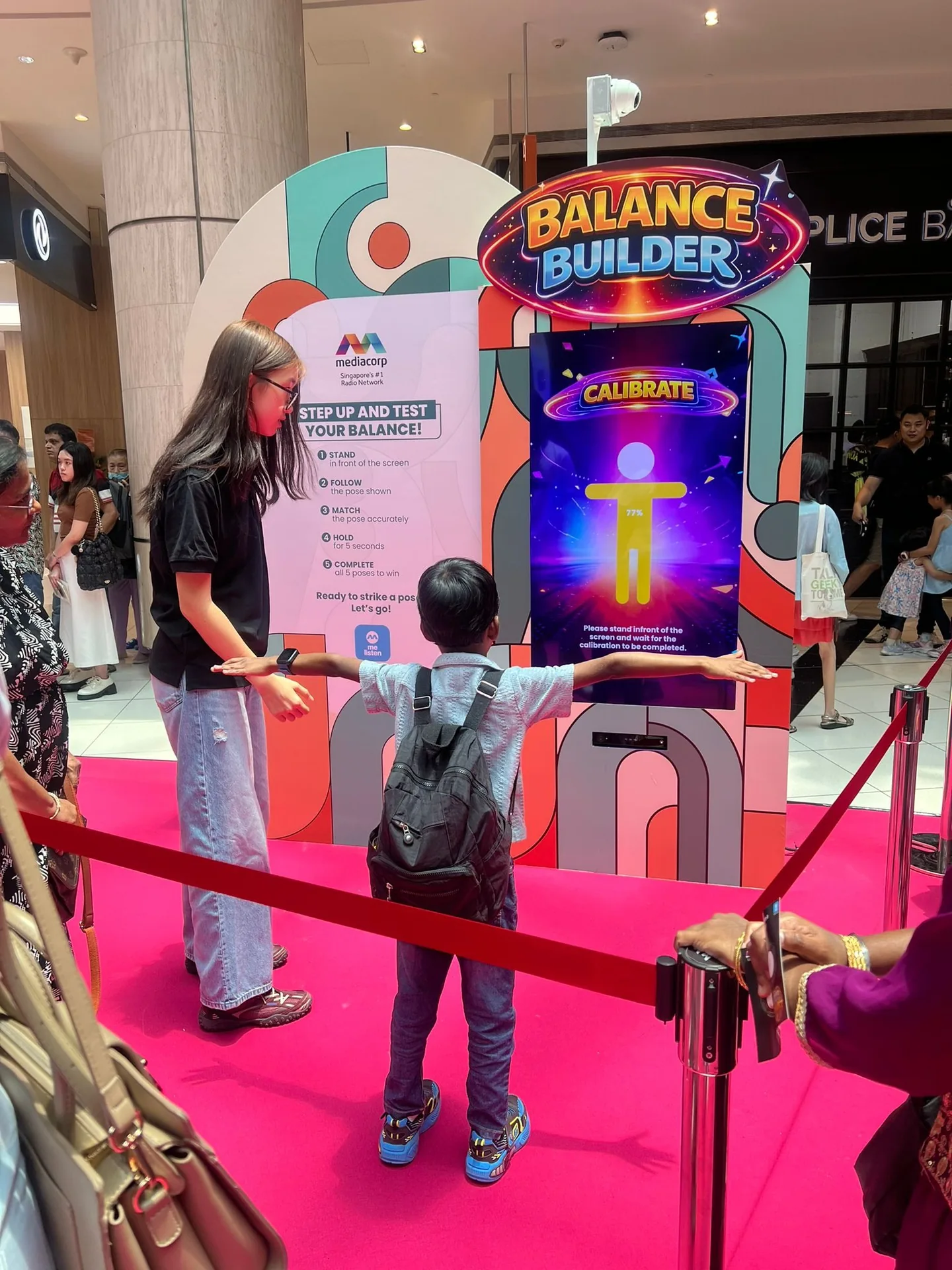
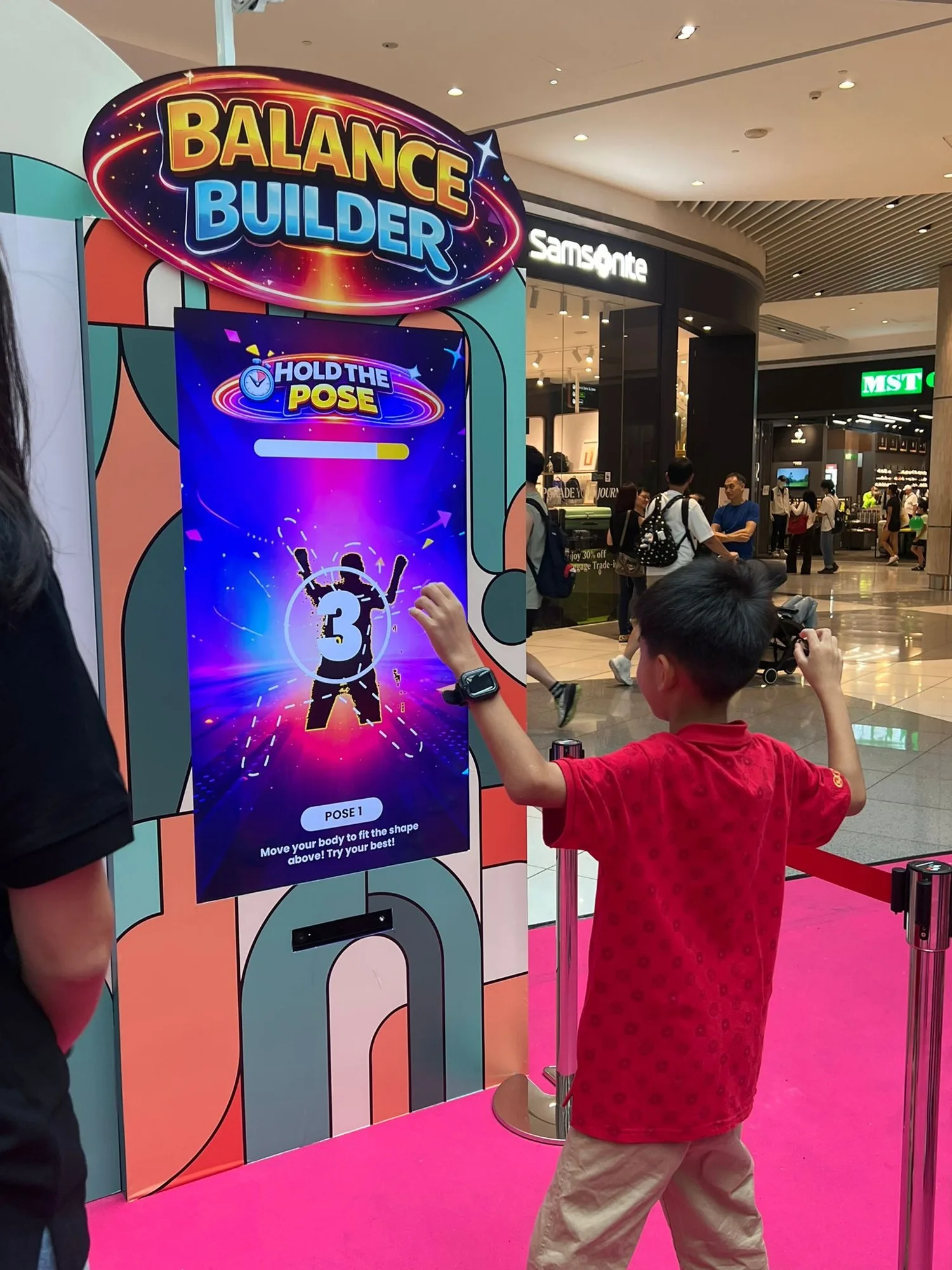
The motion game asks players to match the displayed body position.
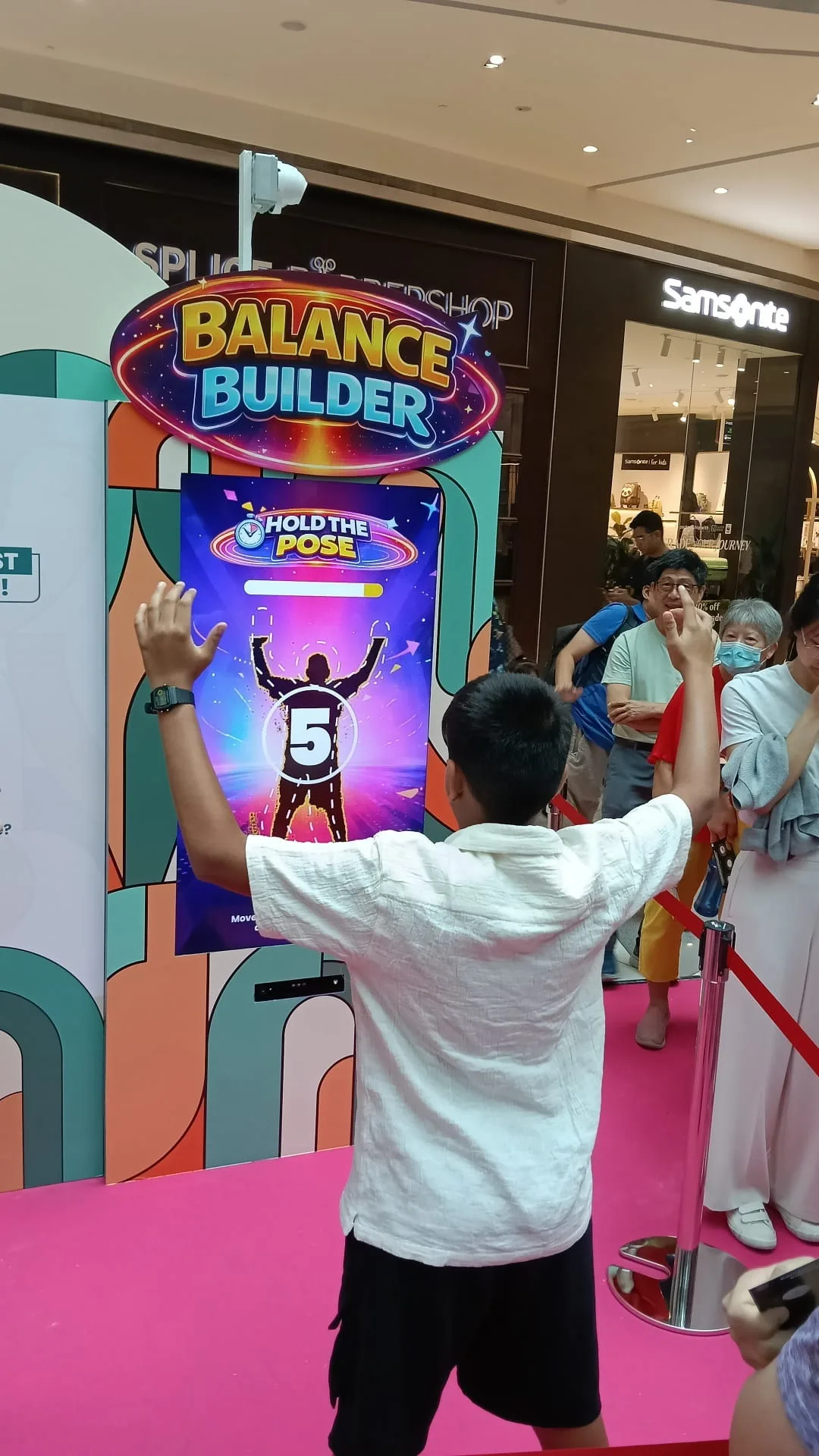
The display guides the player through a timed pose.
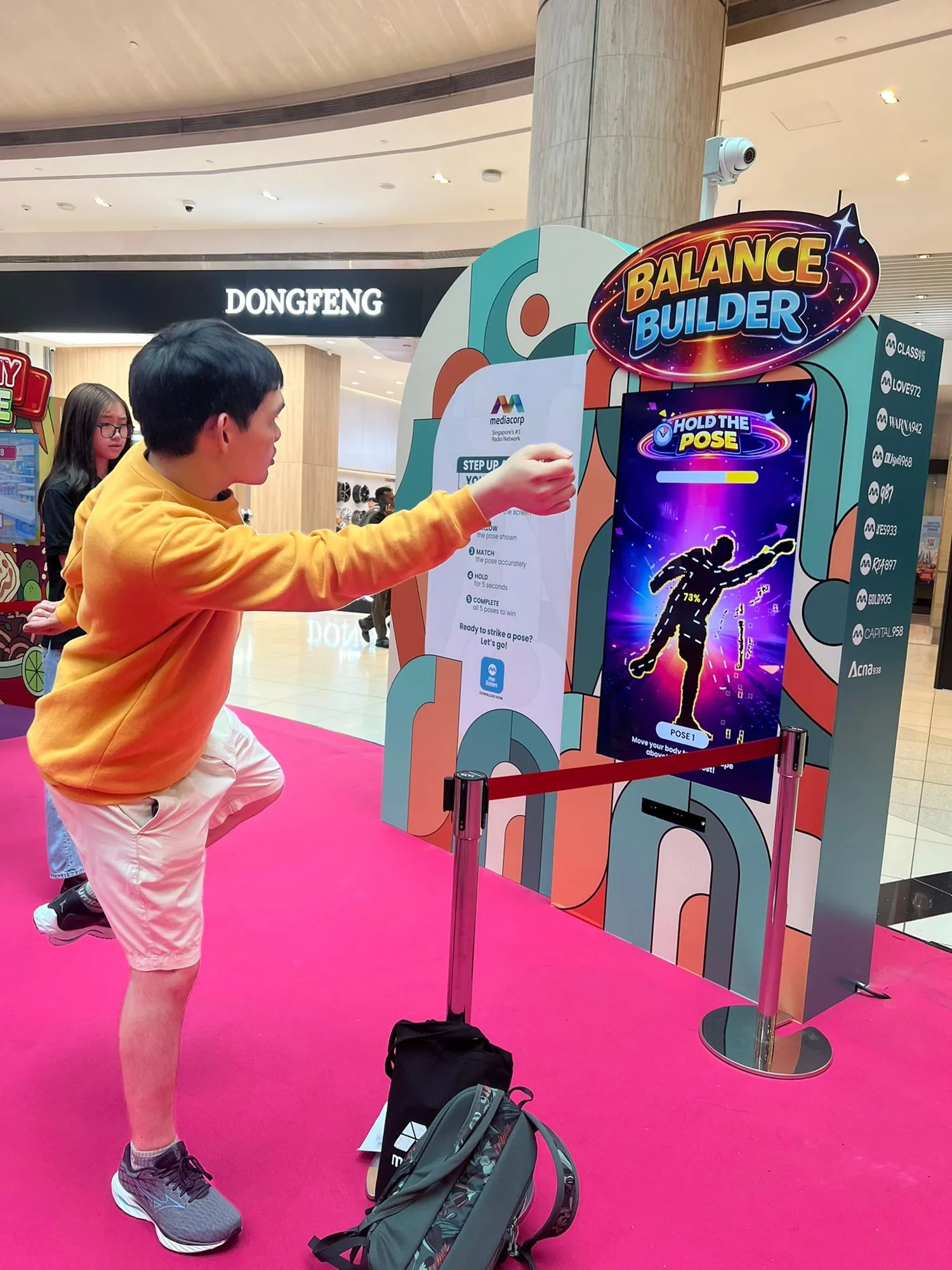
The physical challenge links balance with on-screen feedback.
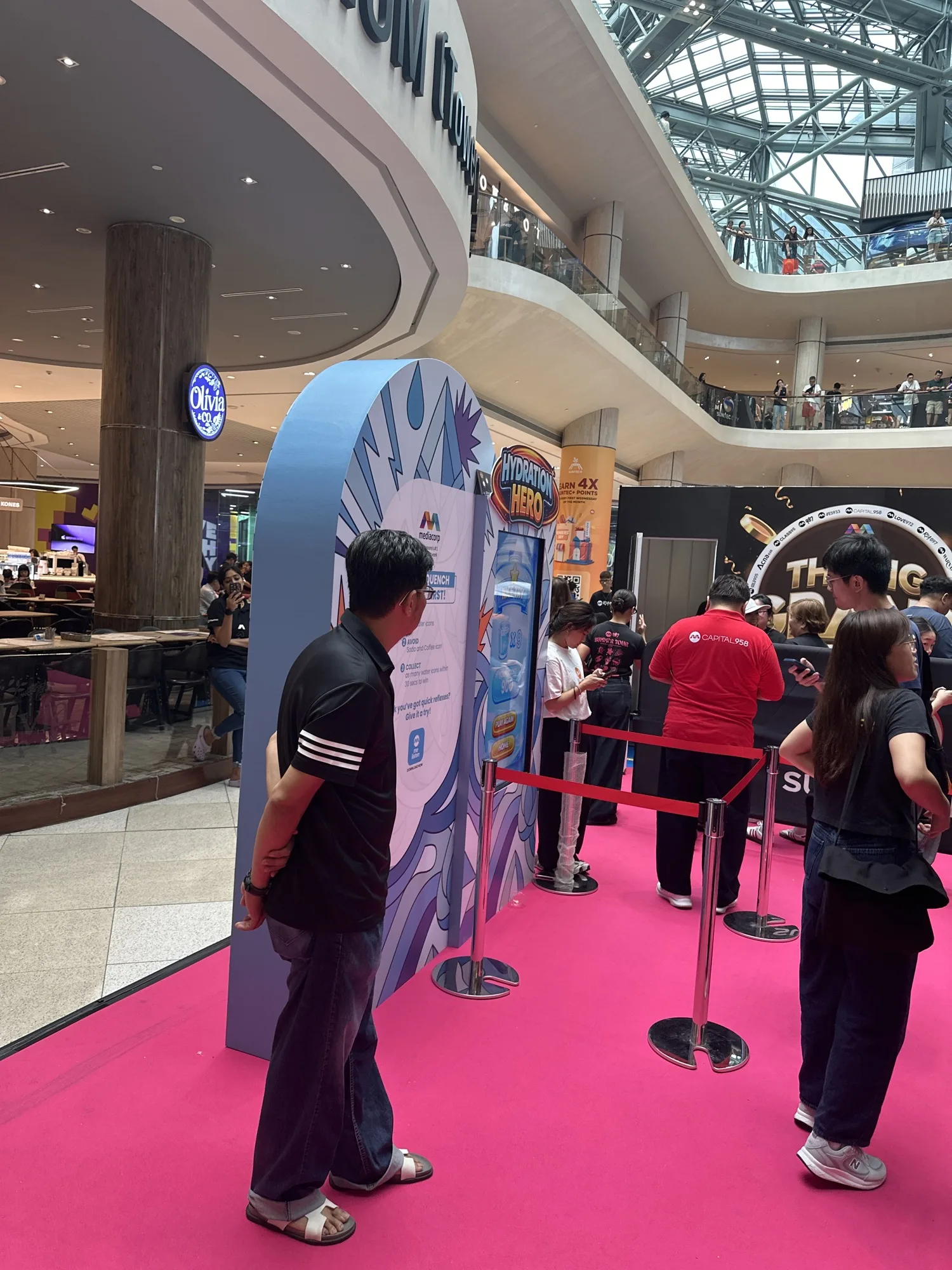
The game station is positioned along the event's visitor route.
FAQ
From creative customisation and software to onsite delivery. Here’s what to consider for your own project.
We can develop a clear target pose and visible progress around your campaign. Pose choice and duration should suit the intended audience, with an alternative participation route where needed.
We define body-position tolerances and hold duration, then test representative movements. The interface should explain lost tracking or an incomplete pose without confusing it with a game failure.
Provide clear space, an understandable demonstration and permission to stop. Review movement demands and assistance with the organiser rather than expecting all participants to perform identically.
Send target poses, audience needs, play-area dimensions and event hours. Tracking, feedback design and facilitation requirements determine the scope.