Every Body Knows Memory Game
A food-themed touchscreen memory game within the Every Body Knows Fair event environment.
- Game design
- Touchscreen application
- Campaign graphics
- Kiosk integration


A food-themed touchscreen memory game within the Every Body Knows Fair event environment.
Singapore
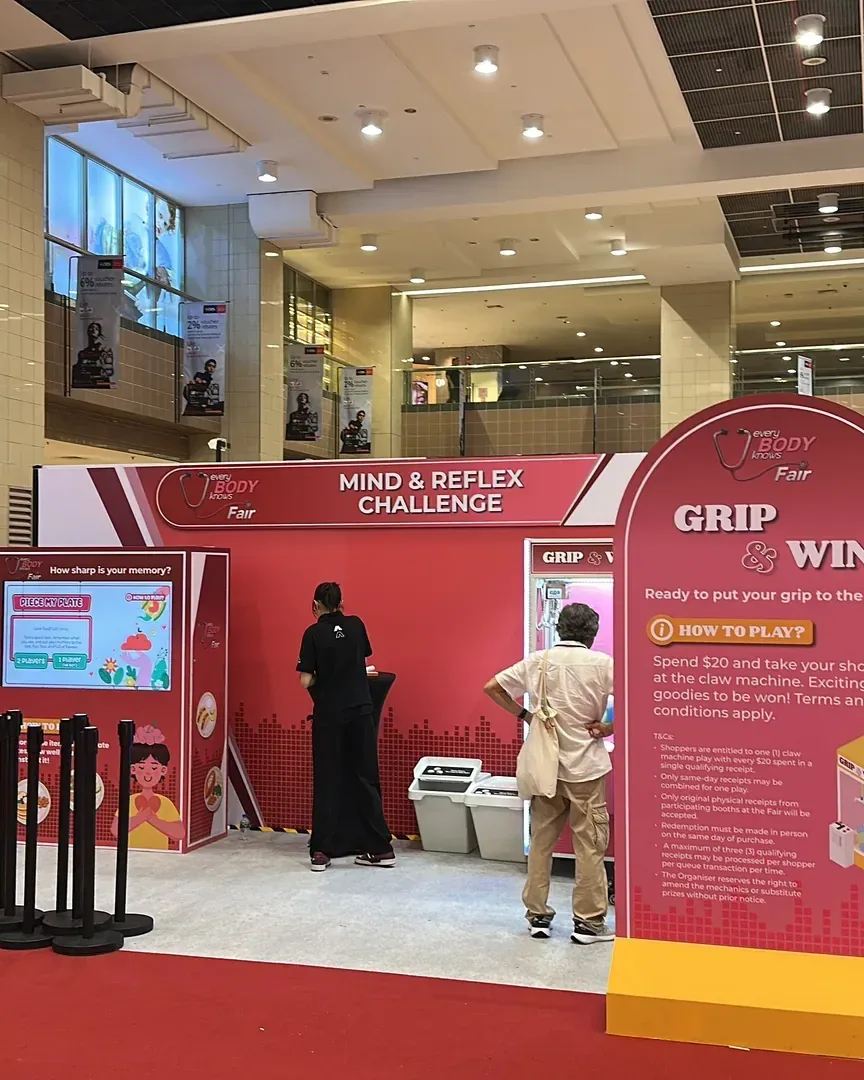
The Mind & Body Challenge kiosk asks visitors to remember a plate of food, then reconstruct the arrangement on the touchscreen. The familiar plate format makes the memory task easy to understand within the fair.
Use a simple play rule to draw visitors into a public wellbeing-themed activation.
The hardware
Presents the invitation and receives direct screen input.
Connects the visitor’s action with the on-screen response.
Brings the display and control position into the event setting.
The software
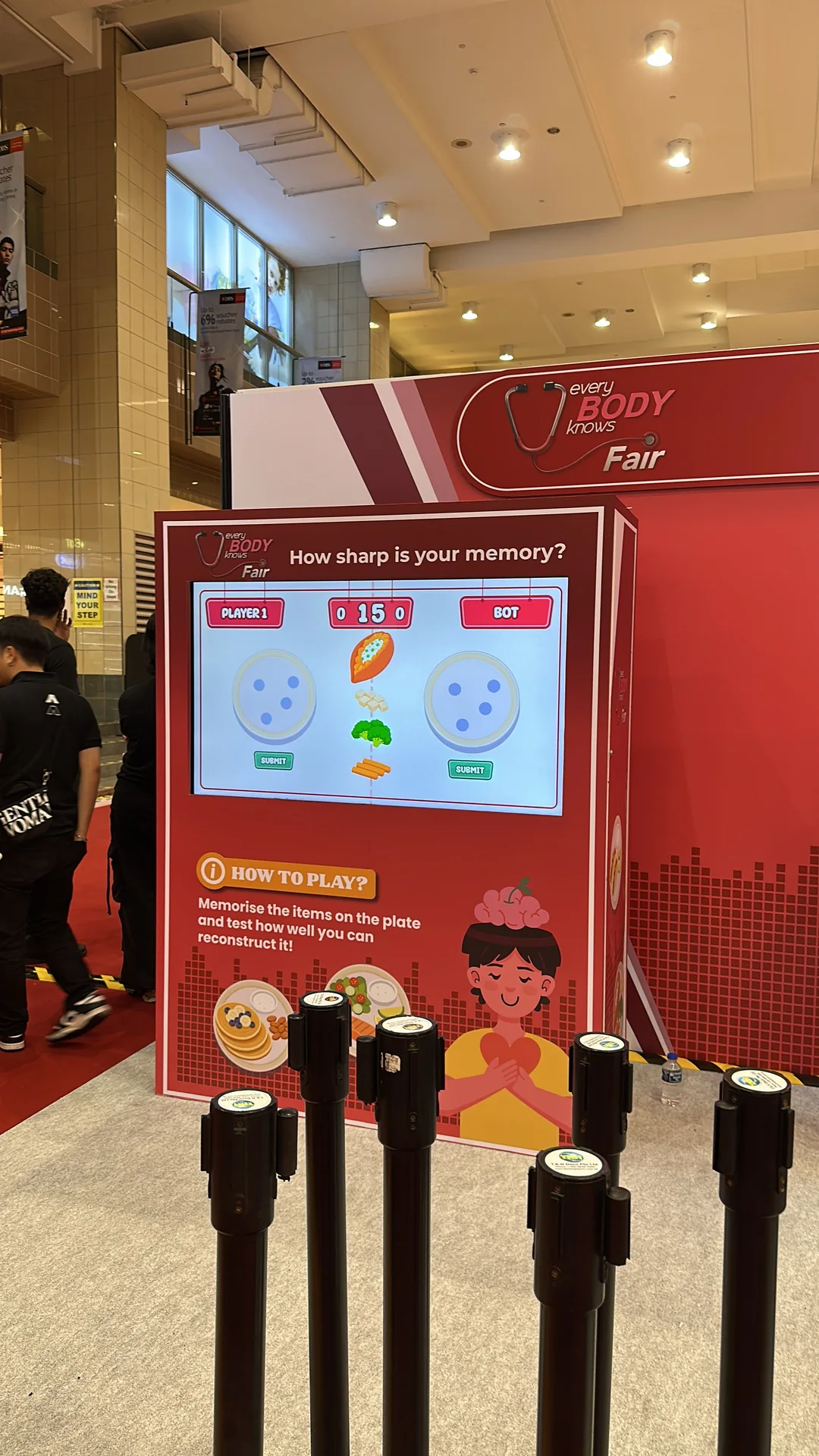
The game presents a reference plate, moves into reconstruction and receives the visitor’s submitted arrangement. Feedback follows that comparison; the photographed instructions support plate recall rather than hidden-card matching.
Look at the reference plate and remember its food arrangement.
Select the food items to reconstruct the plate.
Send the completed plate for the game’s response.
See how the reconstructed plate compares with the reference.
The finished experience
The memory format gave visitors a quick point of participation within a broader event about the body and wellbeing.
 Video
Project footage showing the experience in action.
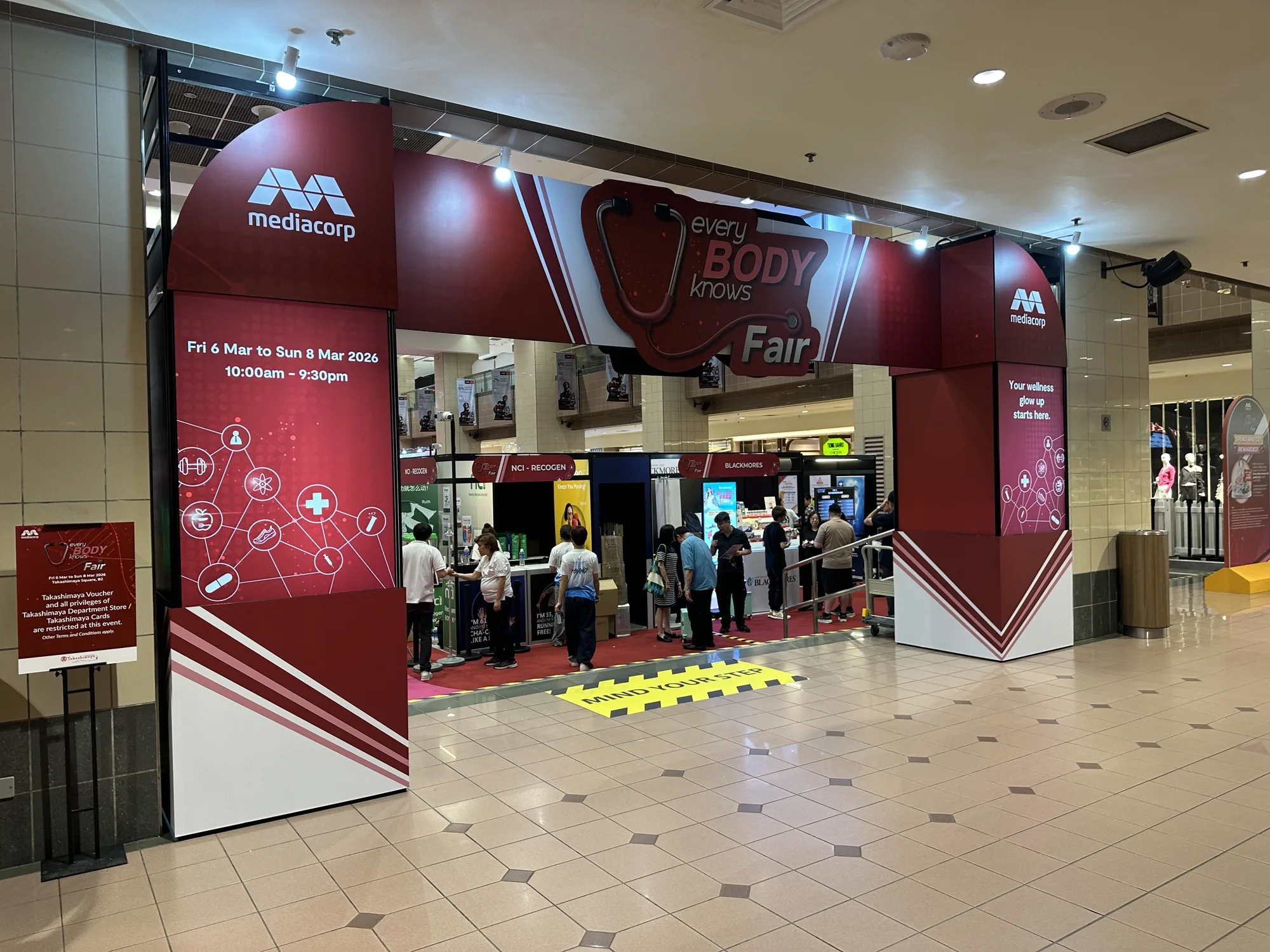
The entrance introduces the wider health-themed activation.
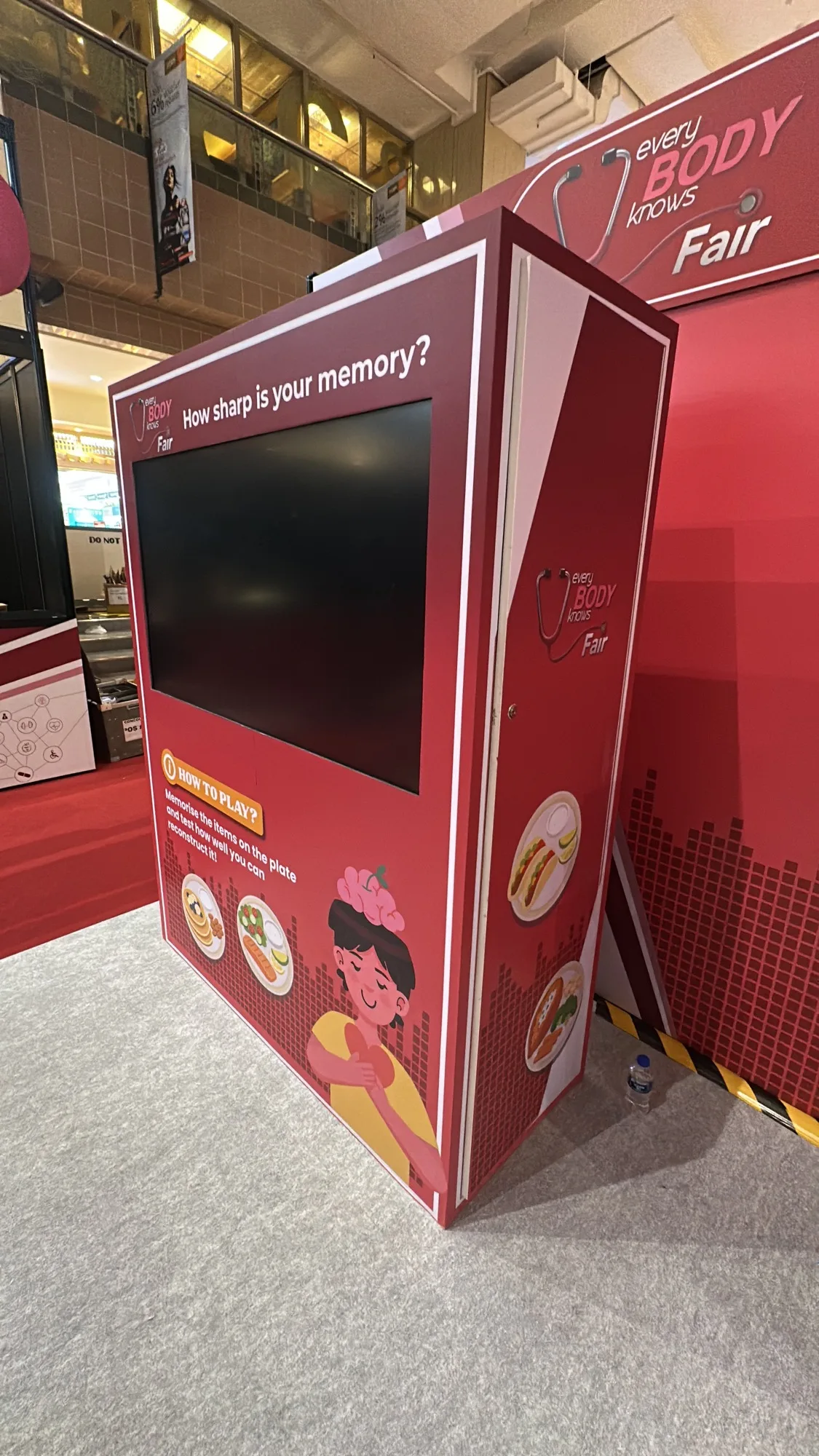
The enclosed screen is prepared for the public activity.
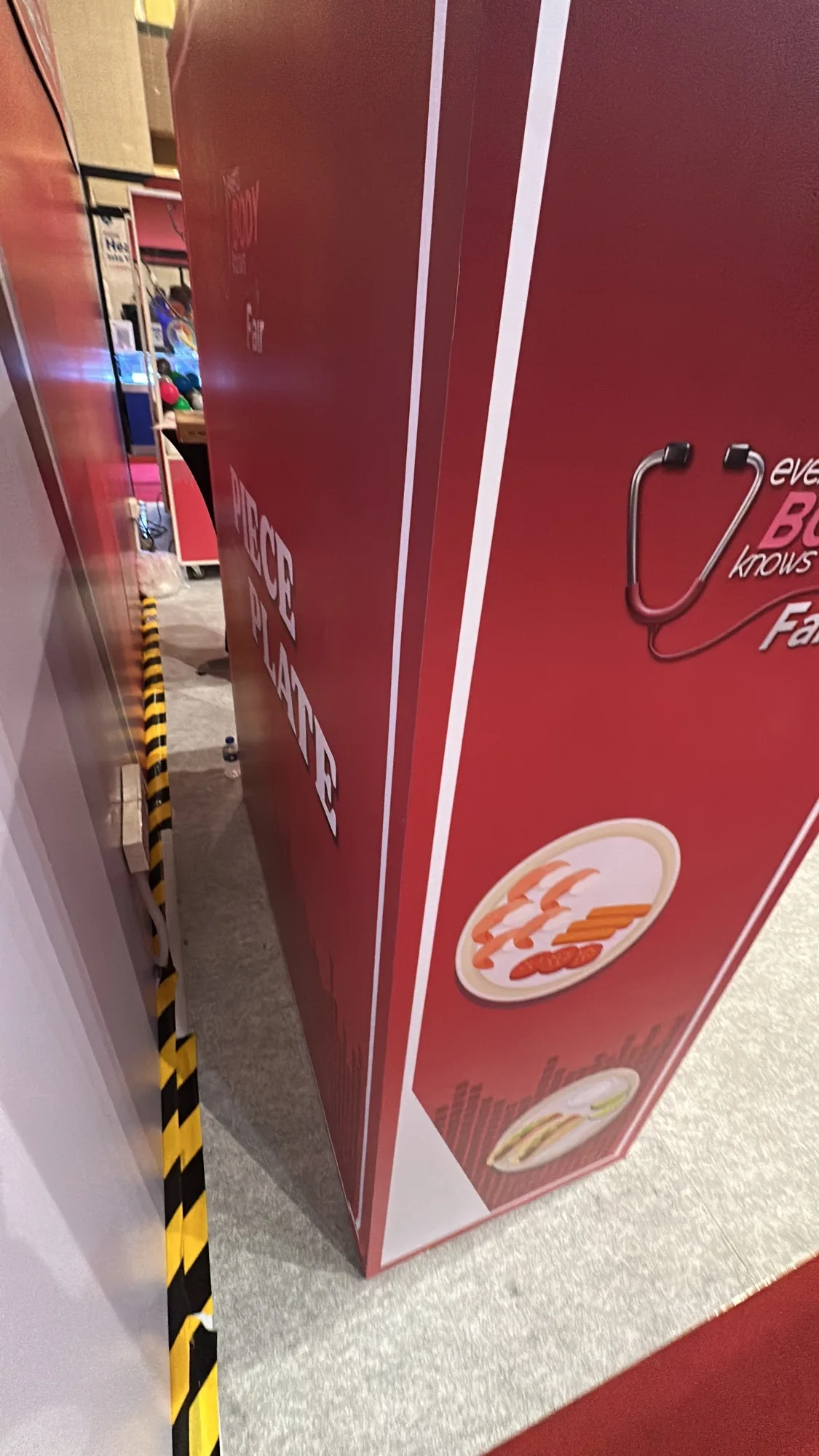
Branded fabrication carries the campaign identity around the kiosk.
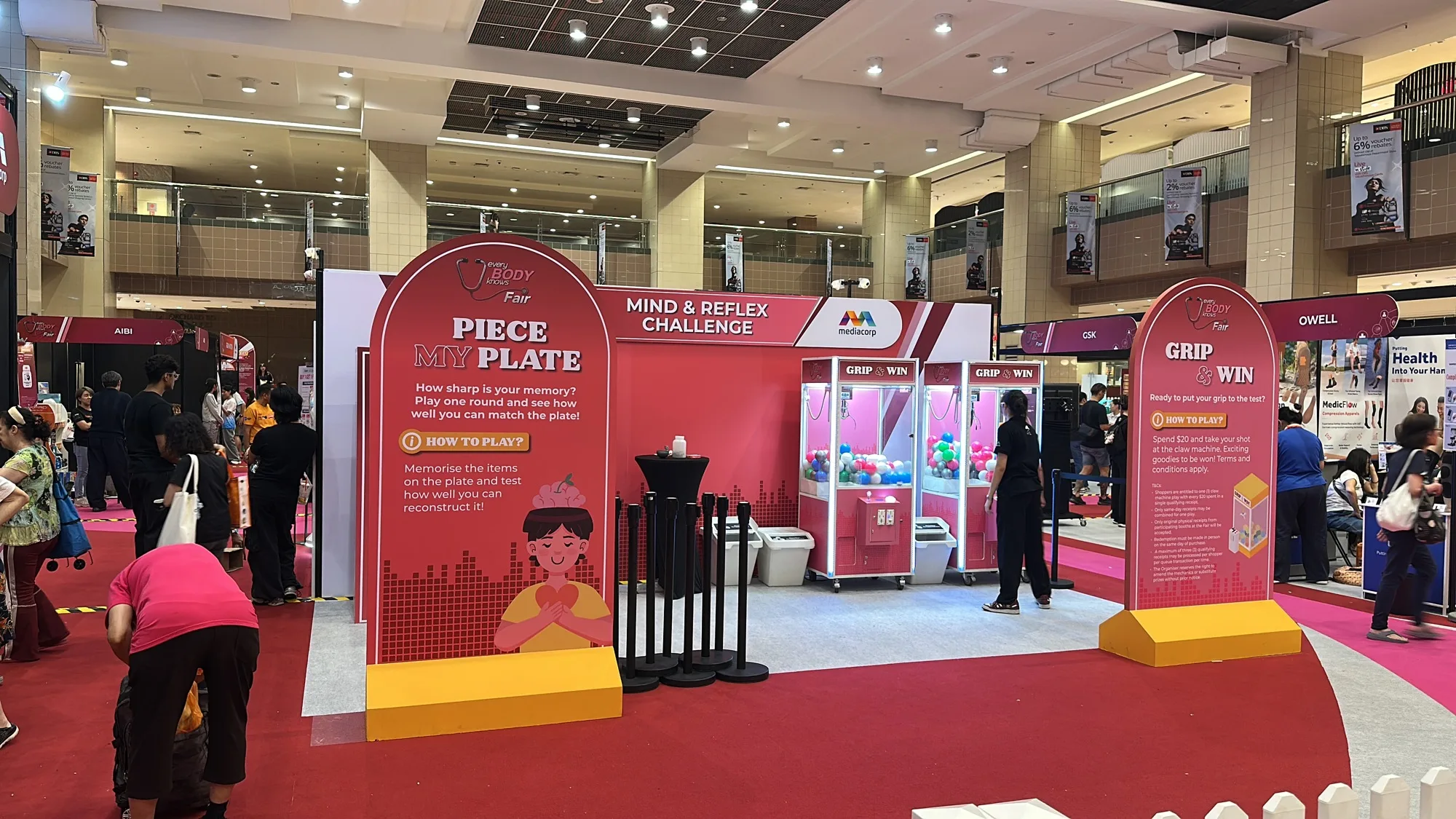
Several activities share the health campaign's event space.
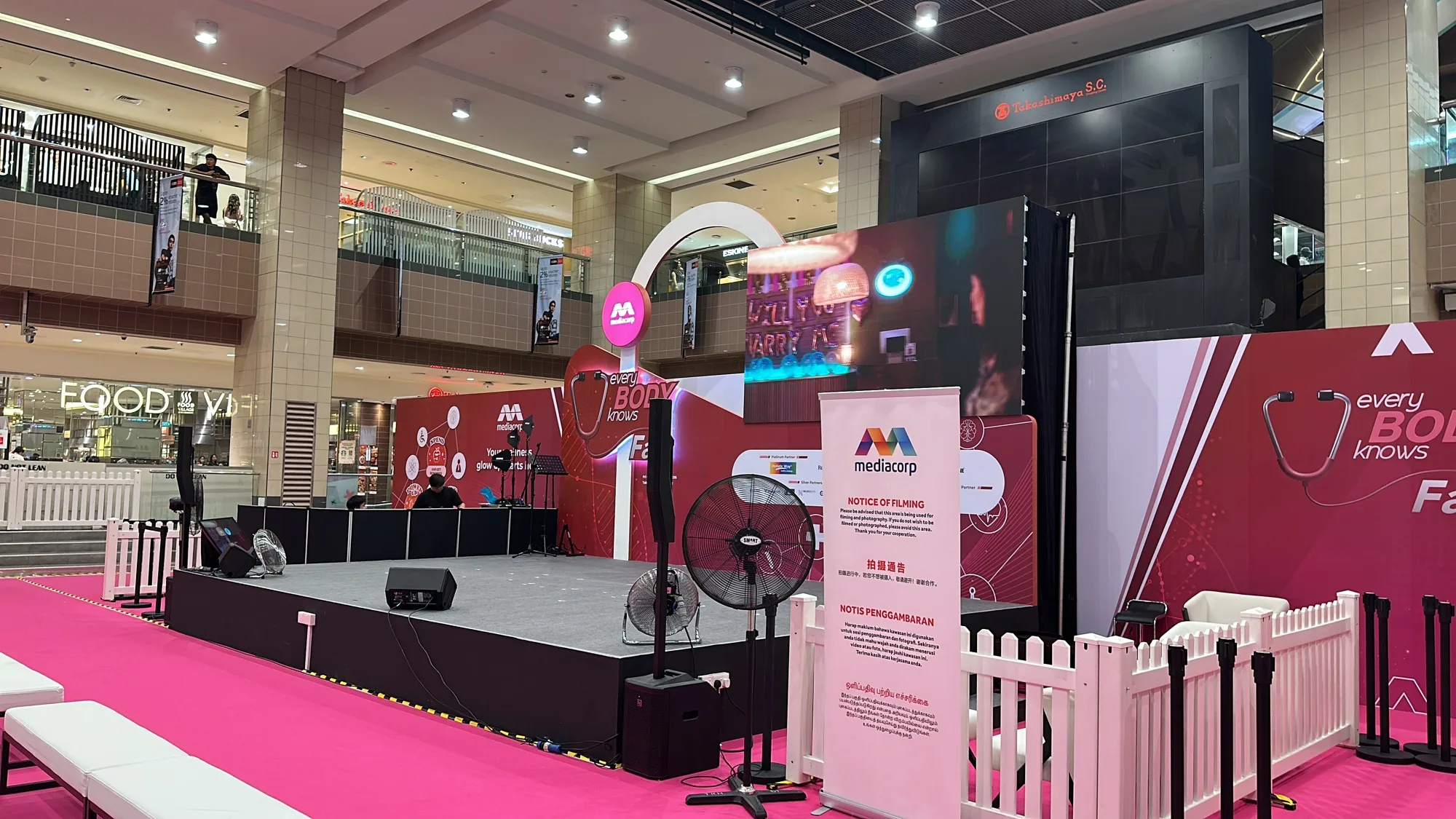
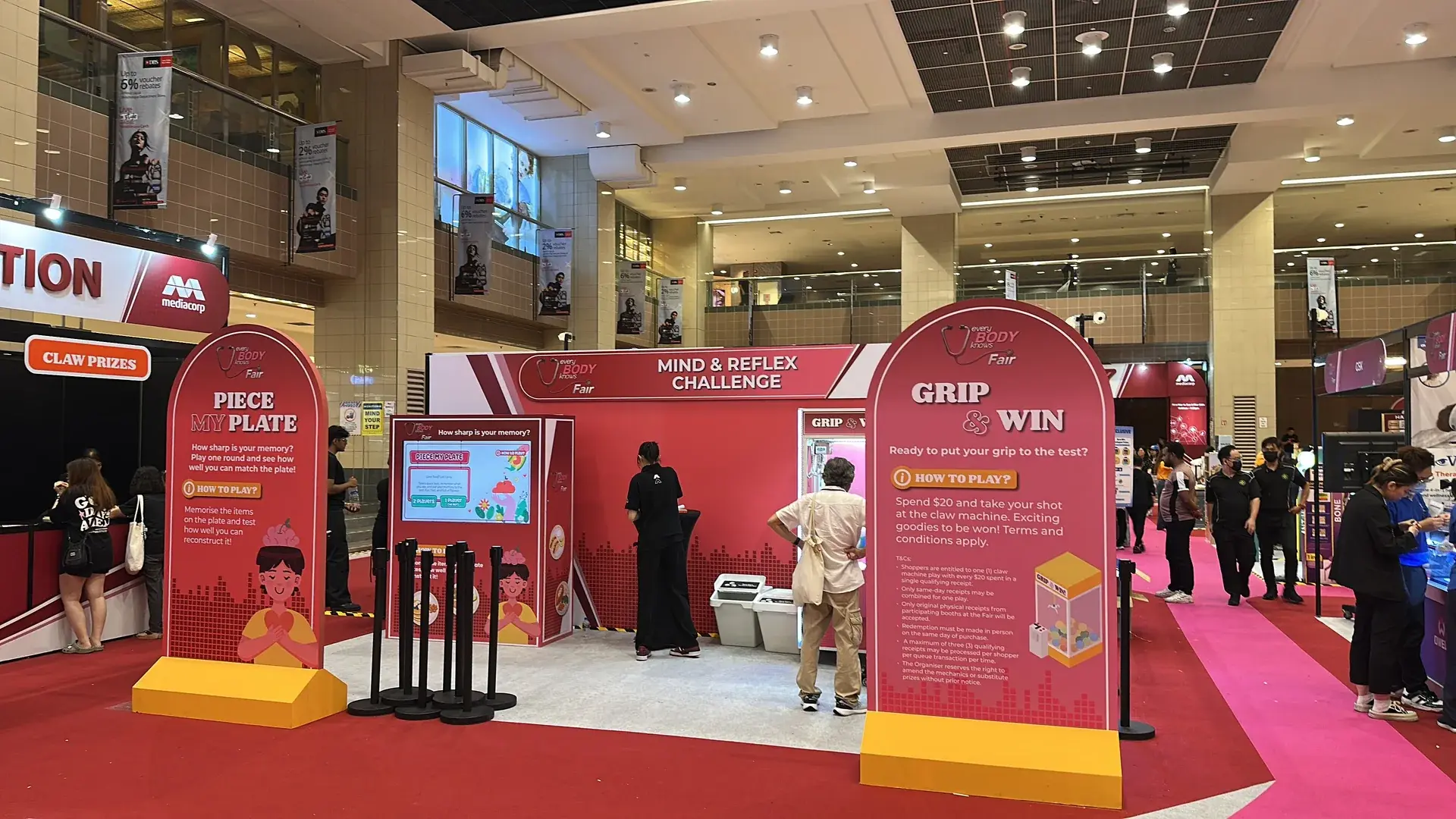
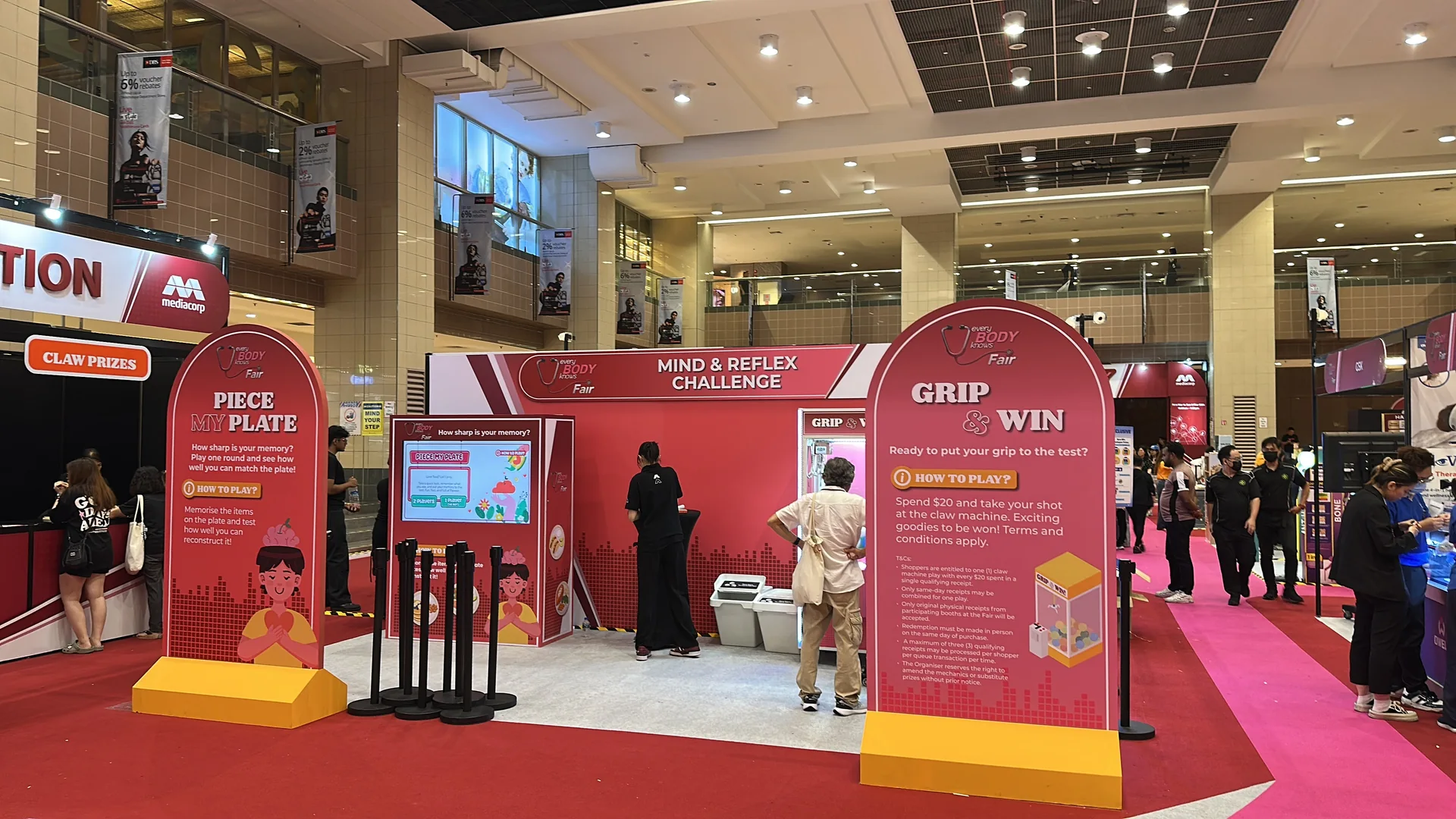
The wider event brings the interactive activities into one branded setting.
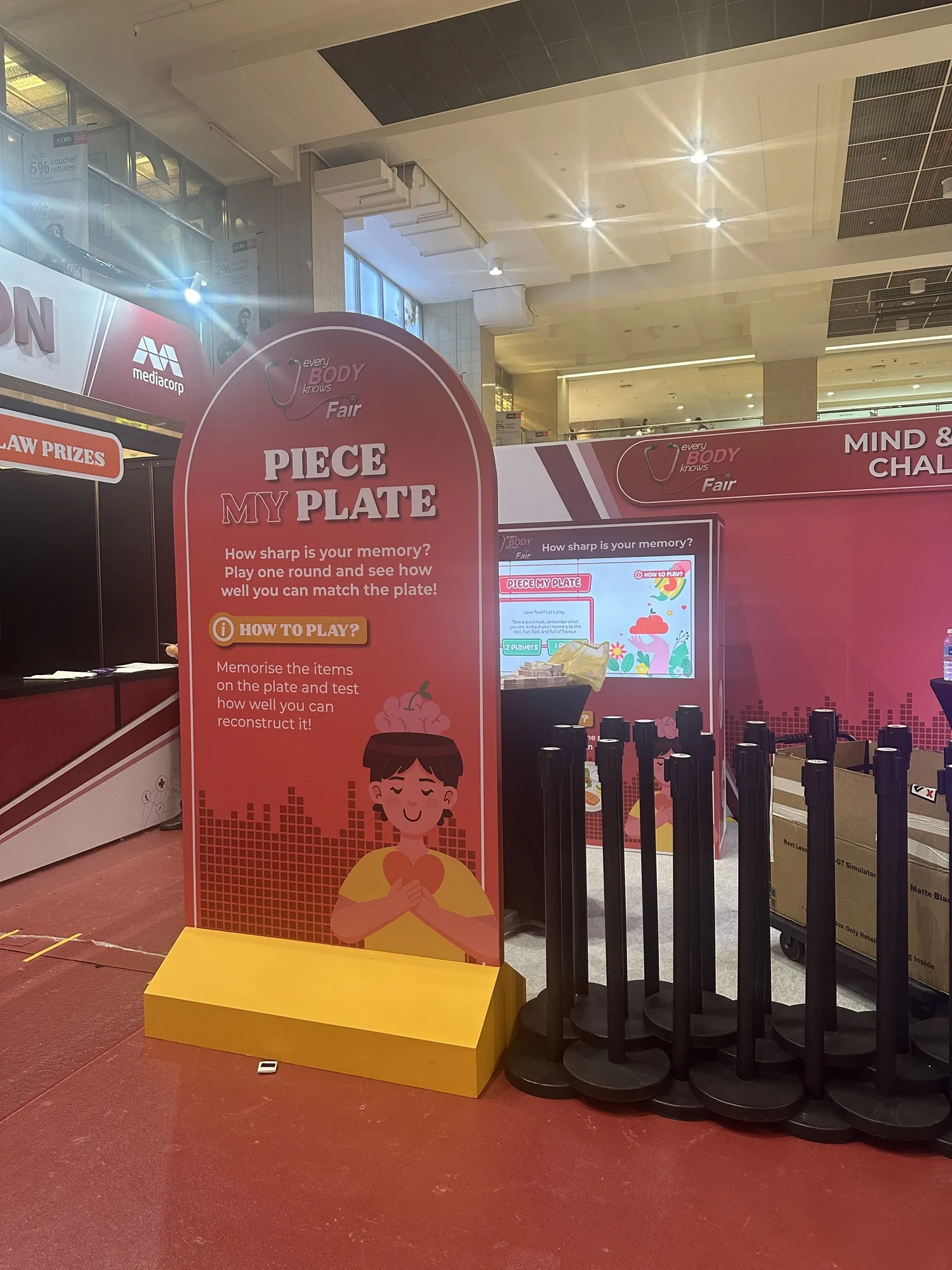
Physical signage introduces the activity before visitors reach the screen.
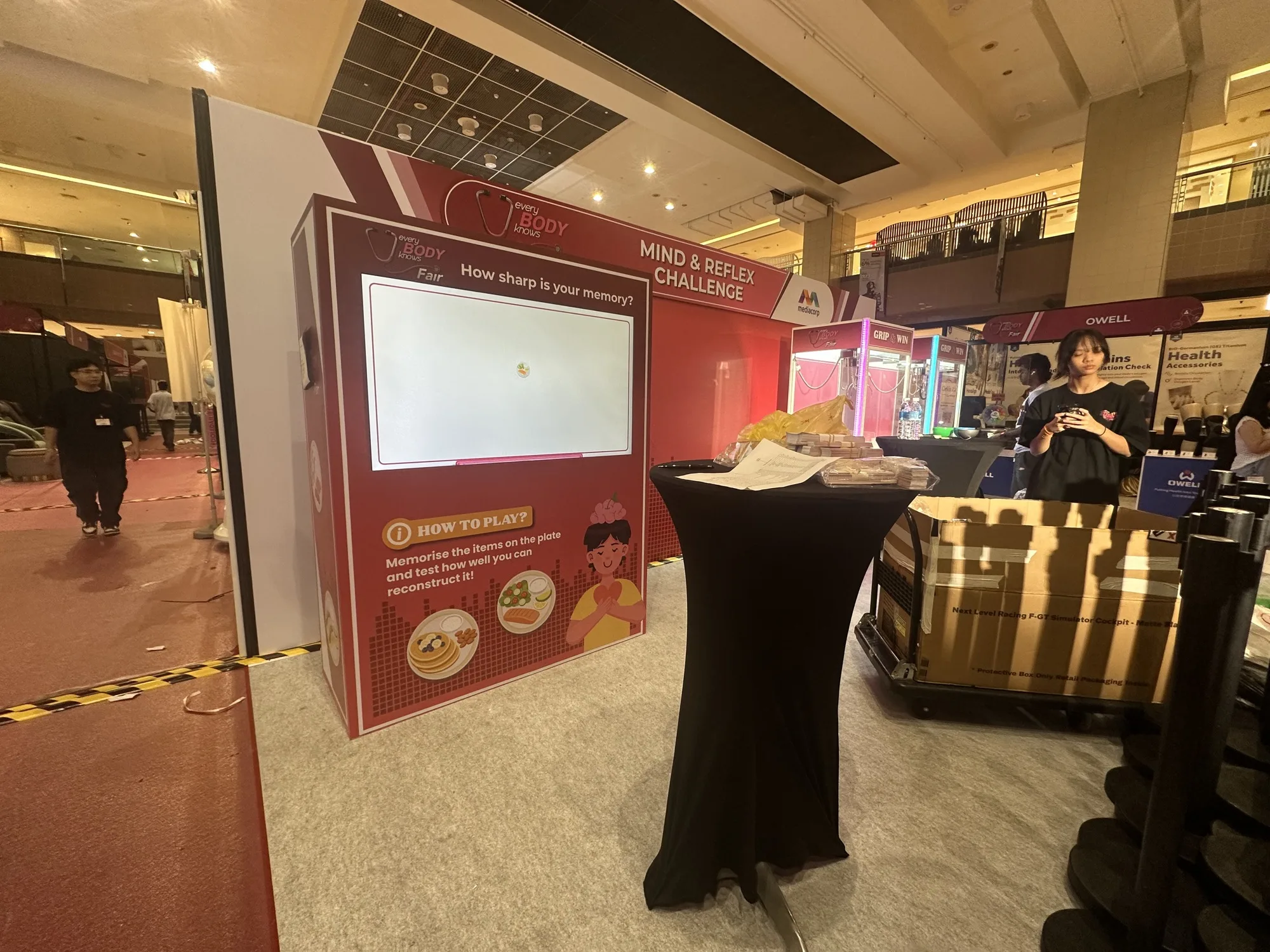
The station is prepared for the memory-game session.
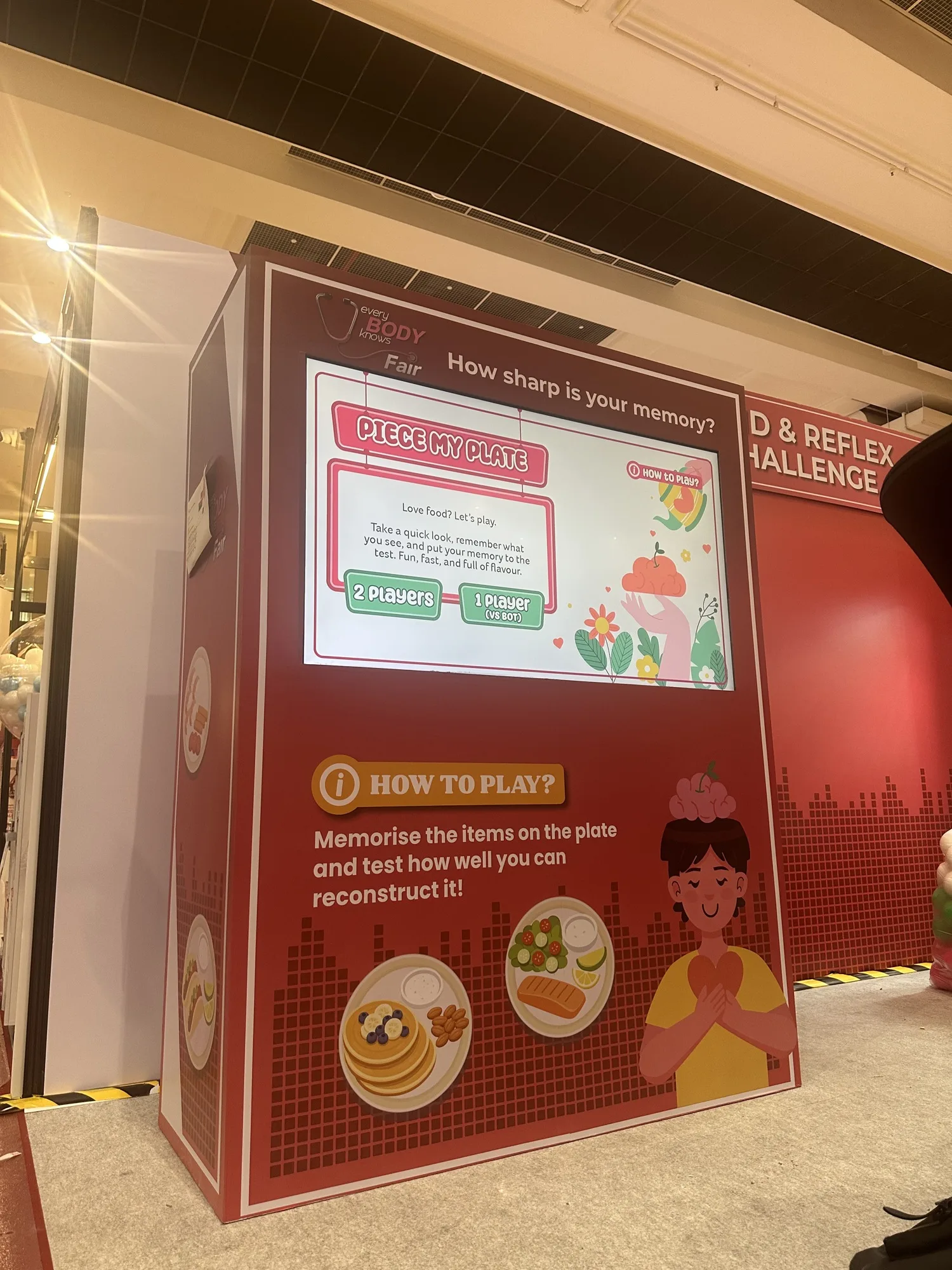
On-screen instructions explain the task before the round begins.
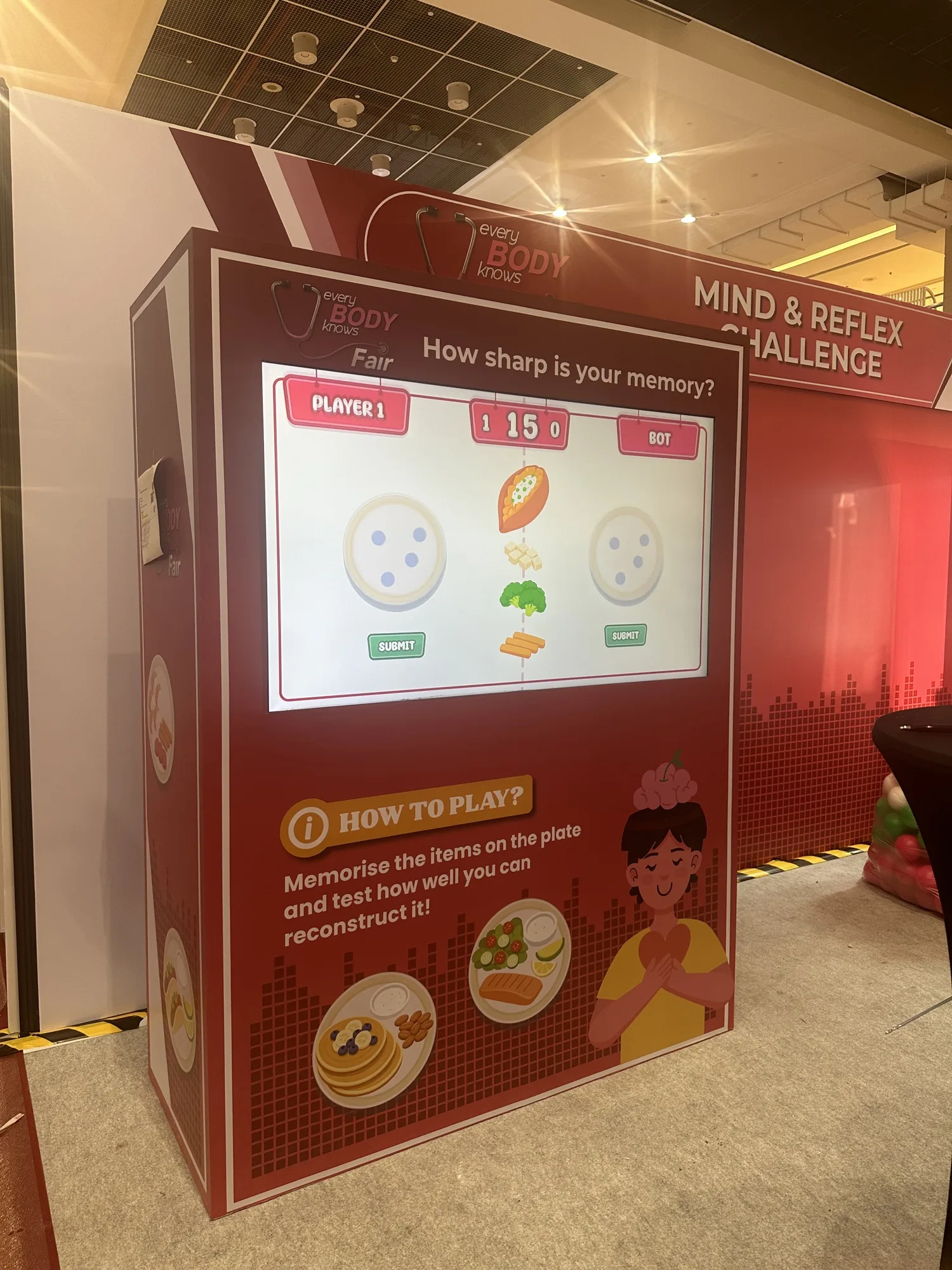
The game presents a visual memory task using food imagery.
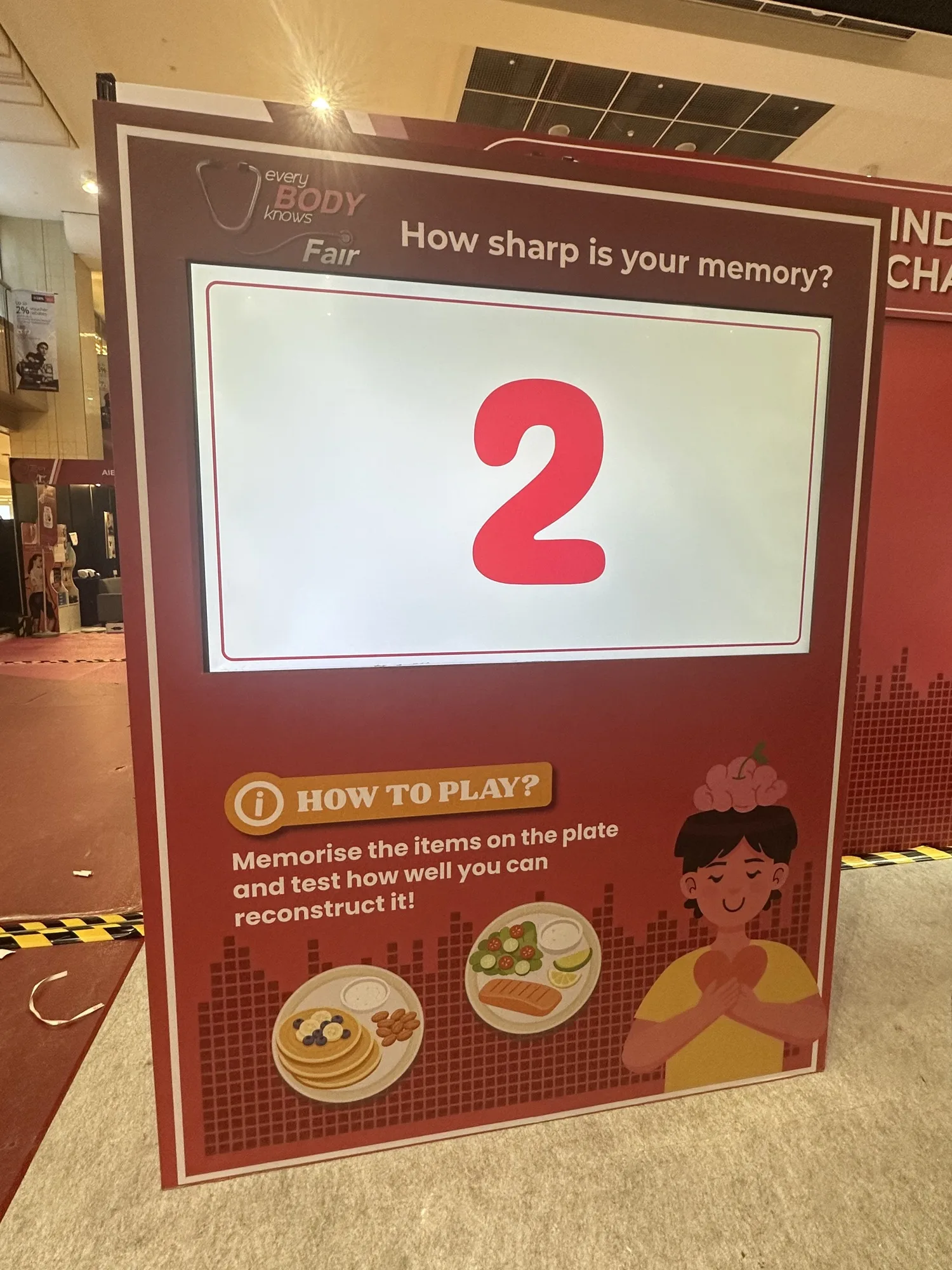
The countdown gives players a clear start cue.
FAQ
From creative customisation and software to onsite delivery. Here’s what to consider for your own project.
We can design a study-and-rebuild activity around recognisable ingredients. The reference and reconstructed plate should make the intended comparison clear, with approved explanations after submission.
We define which items and positions matter, when the reference disappears and how feedback is calculated. This is a reconstruction task, so its rules differ from matching hidden cards.
Use a practice prompt or concise demonstration before the reference appears. Staff should understand the study period, submission step and how to reset for a new participant.
Provide ingredient sets, comparison rules, learning objectives and target hardware. Arrangement variations, feedback content and testing with the audience determine the estimate.